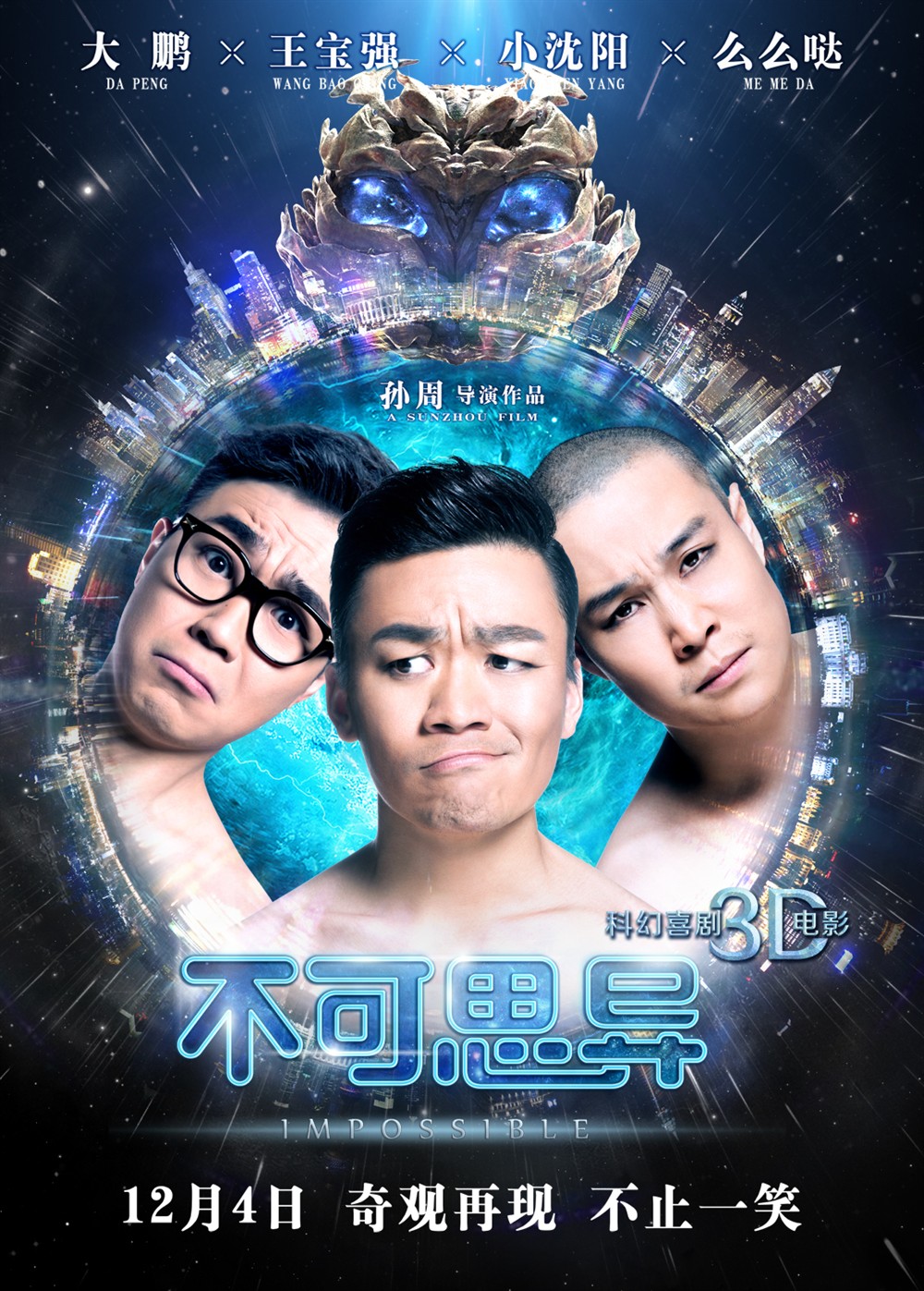
A mind-bogglingly ill-conceived and misguided film, Sun Zhou’s Impossible tells of a truck driver (Wang Baoqiang), who encounters a powerful alien entity named Muah Muah that’s the shape of a tennis ball but very powerful, and has come to earth to study its inhabitants. The entity provokes the curiosity and greed of various people including the truck driver’s boss (Xiao Shenyang) who’s bankrupt and owes money to loan sharks, his long-time customer (Xin Zhilei) who’s in the dilemmas of unplanned pregnancy, and a scummy rival (Da Peng) who seeks to further expand his successful business and wants to control Muah Muah’s powers. Impossible never chooses what it wants to be: its humor is resolutely lowbrow, essentially a combination of relentlessly mugging actors (Xiao Shenyang and Da Peng are on a constant mug-off) and cutesy pratfalls (Muah Muah was clearly conceived to catch on in a Minion sort of way), yet the film revolves around the traumatic loss of a child, and milks it relentlessly for tears in its second half. The ‘studying earthlings’ subplot is merely a footnote and yields not one single clever observation, while the film occasionally switches to jarring violence: this is a film that has a cute, chipmunk-voiced alien AND a scene of dental torture. In the final stretch the weirdness goes off the charts, as it borrows from District 9 (a man mutates horribly into a tentacular alien) and, even more risibly, from 2001, A Space Odyssey (let’s just say there’s a foetal space trip). And despite being an unhinged oddity, the film still manages to be preachy, telling us how parents should care for their children and sometimes we must be able to let go of the past. A teaching we’ll gladly apply to this film. *
IMPOSSIBLE (2015) short review
Posted by LP Hugo on December 23, 2015
https://asianfilmstrike.com/2015/12/23/impossible-2015-short-review/
SPEED ANGELS (2011) short review
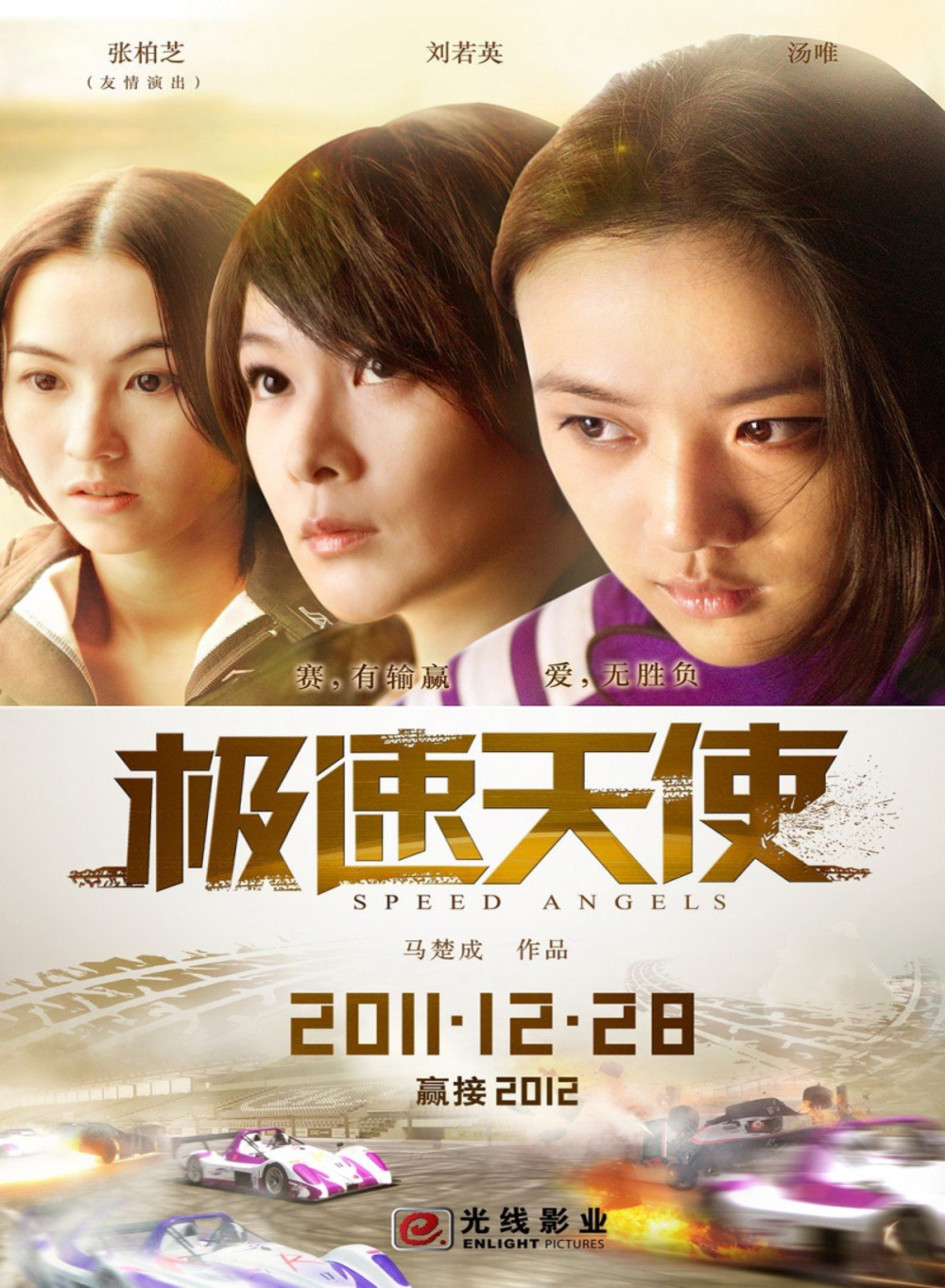
Jingle Ma’s Speed Angels bears the distinction of being an all-female racing film – a rare thing indeed – but squanders it with a soapy, mechanical plot and an absolute lack of excitement in the racing scenes. Its tale of a washed-up racing legend (Rene Liu), her rival both on the tracks and in love (Cecilia Cheung) and her gifted new partner (Tang Wei) whose gift for speed is hindered by confidence issues, is a reasonably solid dramatic spine, but it’s constantly undercut by cringeworthy melodrama wherein all female and male characters (here an assorted bunch of pan-Asian heartthrobs who get overshadowed by the main trio) are connected by a tangled web of love, whether it be puppy love, unrequited love, love triangles, tough love or self-interested love. And the racing is as uninvolving as the plotting: races amount to a stale alternation of in-cockpit shots and truly baffling all-CGI exterior shots. As often with Jingle Ma the film is all bathed in blinding levels of white light, except this time there’s also a whole lot of purple ; it is, quite sincerely, one of the purplest films ever. What little traction Speed Angels gets comes from Rene Liu, whose charisma makes her too good for that kind of film, and Tang Wei, who shows a delightful lighter side that her often dark or tragic roles don’t allow her to display. She also wears a different headband in every scene (possibly even every shot). Cecilia Cheung doesn’t register much: like in many of her post-comeback roles there’s a muted, awkward quality to her presence. Martial arts queen Cheng Pei Pei has fun in a small quirky role: she obviously knows what kind of film she’s in. **
Posted by LP Hugo on December 13, 2015
https://asianfilmstrike.com/2015/12/13/speed-angels-2011-short-review/
MAGIC CARD (2015) review
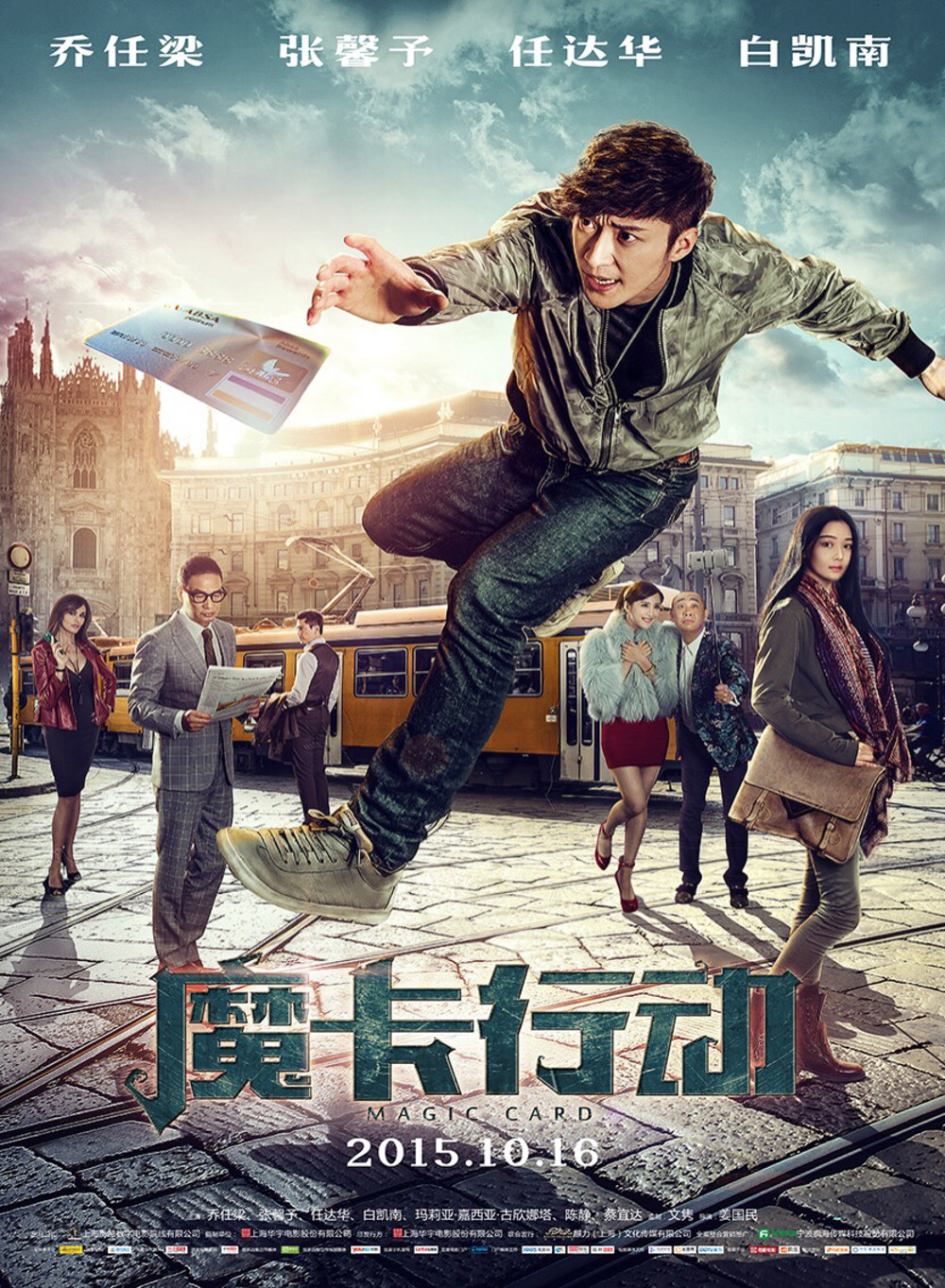
An impressively ill-conceived little caper, Keung Kwok Man’s Magic Card start with a quick-cut montage explaining that credit card fraud is widespread and complex, followed by the introduction of a well-organized credit card fraud gang. Then it sets all this aside for most of the film, before returning to it in the final 10 minutes. It’s as if the screenwriters bookended one screenplay with the introduction and conclusion of another, unrelated screenplay. The title refers to a card that the hero uses to determine if a bank terminal is fraudulent or not, but that card is not seen or mentioned in the film more than a few seconds in one single scene. And for most of its runtime, Magic Card tells of a computer expert (Kimi Qiao) who travels to Pavia (a idyllic town near Milan) to follow his foster sister (Dada Chan) and her vain, ineffectual and filthy rich boyfriend (Kainan Bai), as the latter prepares to buy and level an entire street to turn it into casinos and karaokes, much to the dismay of the locals, represented by a fortright lawyer (Maria Grazia Cuccinotta). Stepping in as a mediator is a rich Chinese businessman (Simon Yam), with whose daughter (Viann Zhang) the computer expert falls in love.
Posted by LP Hugo on December 12, 2015
https://asianfilmstrike.com/2015/12/12/magic-card-2015-review/
MOJIN: THE LOST LEGEND (2015) review
Three months after Lu Chuan’s Chronicles of the Ghostly Tribe comes another adaptation of Tianxia Bachang’s 2006 best-selling (but never translated in English) series of eight novels, Ghost Blows Out the Light. Though set later than the Lu Chuan film in the book’s chronology, Wuershan’s Mojin: The Lost Legend isn’t a sequel: it’s a rival adaptation with an entirely different backing, creative team and cast, as well as a wildly different approach to the source material. Starting in New York but set mostly in the prairies and depths of Inner Mongolia, it follows three adventurers known as the Mojin Xiaowei, who perpetuate the tradition of tomb raiders once sent by emperors in times of need to ‘borrow’ riches from tombs. Shirley Yang (Shu Qi), Hu Bayi (Chen Kun) and Wang Kaixuan (Huang Bo) live in New York, having retired from tomb raiding. But through their associate Grill (Xia Yu), Wang gets hired by a rich and mysterious businesswoman (Liu Xiaoqing) and her cult-like followers to help her find the ancient tomb of a Khitan princess in Inner Mongolia. Initially reluctant but smelling something fishy, Shirley and Hu follow the expedition closely. But once they find the tomb it becomes apparent they’ve been there already : 20 years before when they were in the Communist Youth League, Hu and Wang loved the same woman, Ding Sitian (Angelababy), but lost her and many other comrades when they entered an an abandoned Japanese underground base where the corpses of soldiers mysteriously came back to life and started slaughtering the intruders. Now it appears that the strange businesswoman’s endgame is to find the Equinox Flower, a fabled artifact that can resurrect the dead…
Posted by LP Hugo on December 7, 2015
https://asianfilmstrike.com/2015/12/07/mojin-the-lost-legend-2015-review/
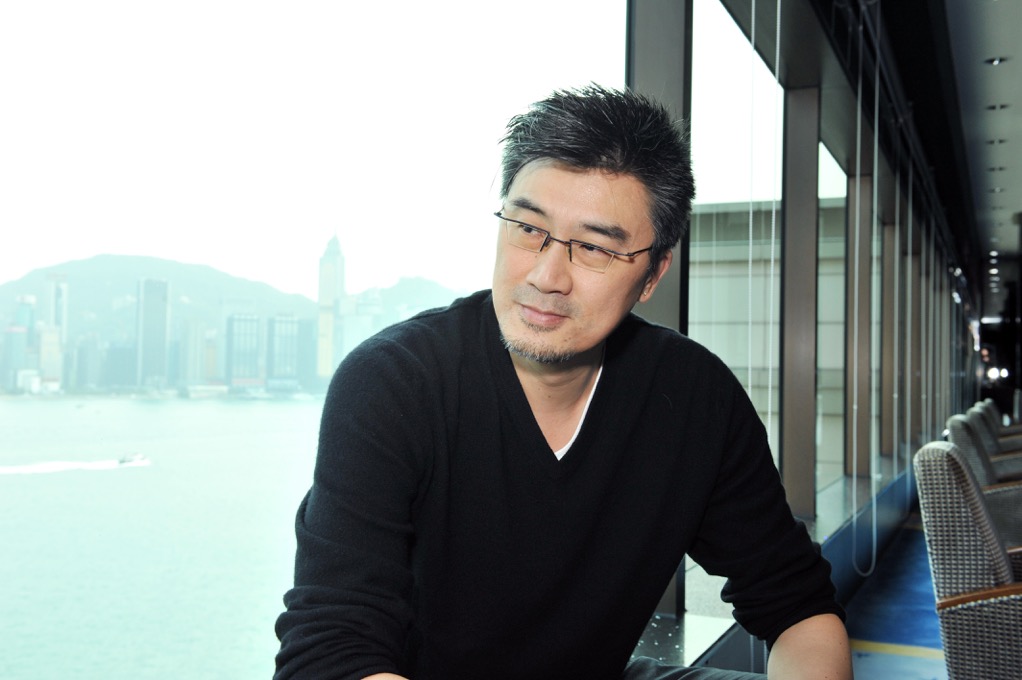
An Interview with Composer Henry Lai
In the twenty year since his film music debut in 1994, Henry Lai Wan Man has secured a firm spot on the short A-list of Chinese film composers, next to fixtures like Chan Kwong Wing or Peter Kam. A four-time Hong Kong Film Awards nominee, his talents have been sought by some of the most high-profile directors in China and Hong Kong, including Dante Lam, Daniel Lee, Mabel Cheung, Alex Law, Gordon Chan, Felix Chong and Alan Mak. And rightly so : his scores show a great versatility, an ability to adapt to different genres and to integrate illustrious musical influences (Ennio Morricone, John Barry, Hans Zimmer…) while never forsaking his own style.
For a primer of Henry Lai’s talents you can listen to his rousing, heroic theme for 14 Blades, the wistful and folkloric “Paddy Field Song” from The Lost Bladesman, the heartbreaking lament for Nick Cheung’s character in The Beast Stalker, the driving investigation theme from The Four, the triumphant Russian-flavoured training music in Star Runner, the tense, pulsating action music from The Sniper, the touching, delicate score for Echoes of the Rainbow, the Morricone-inspired music in A Fighter’s Blues, the ominous main titles cue from Fire of Conscience, the gripping percussive music (one of Lai’s specialties) of White Vengeance, or the gloriously epic main theme of Three Kingdoms : Resurrection of the Dragon.
Posted by LP Hugo on November 27, 2015
https://asianfilmstrike.com/2015/11/27/an-interview-with-henry-lai/
THE WITNESS (2015) review
A remake of his own successful Korean thriller Blind (2011), Ahn Sang-hoon’s The Witness transposes the action to China but keeps much of the original film’s key plot points. Xing (Yang Mi) is a young cop who lost her brother in a car accident. She blames herself for the tragedy, as she had tied her unruly sibling’s hands in the car to keep him still, leading to his eventual inability to escape the car as it teetered on the edge of a bridge. She also lost her eyesight in the accident, which means she can’t be a cop anymore, and leads a dour, guilt-ridden life. One day she gets into a cab whose driver turns out to be a psychopath (Zhu Yawen) who’s behind a wave of abductions, with all the victims being beautiful young women. As Xing struggles to break free of the driver, the cab hits someone who was crossing the street, and she manages to escape. The next day she reports the incident to the police, and astounds the detective in charge of the investigation (Wang Jingchun) with her astute observations on her would-be abductor : though she’s blind, her astute remaining senses and sharp deduction skills allow her to provide useful information. But soon thereafter a young skater, Chong (LuHan), turns up at the police station : he says he’s witnessed the incident, but his indications don’t match Xing’s. As a wayward youngster his testimony doesn’t weigh much more than that of the blind woman, but things become urgent when Xing realizes she’s dropped her diary in the psychopath’s car, and he may now be stalking her.
Posted by LP Hugo on November 24, 2015
https://asianfilmstrike.com/2015/11/24/the-witness-2015-review/
FULL STRIKE (2015) short review
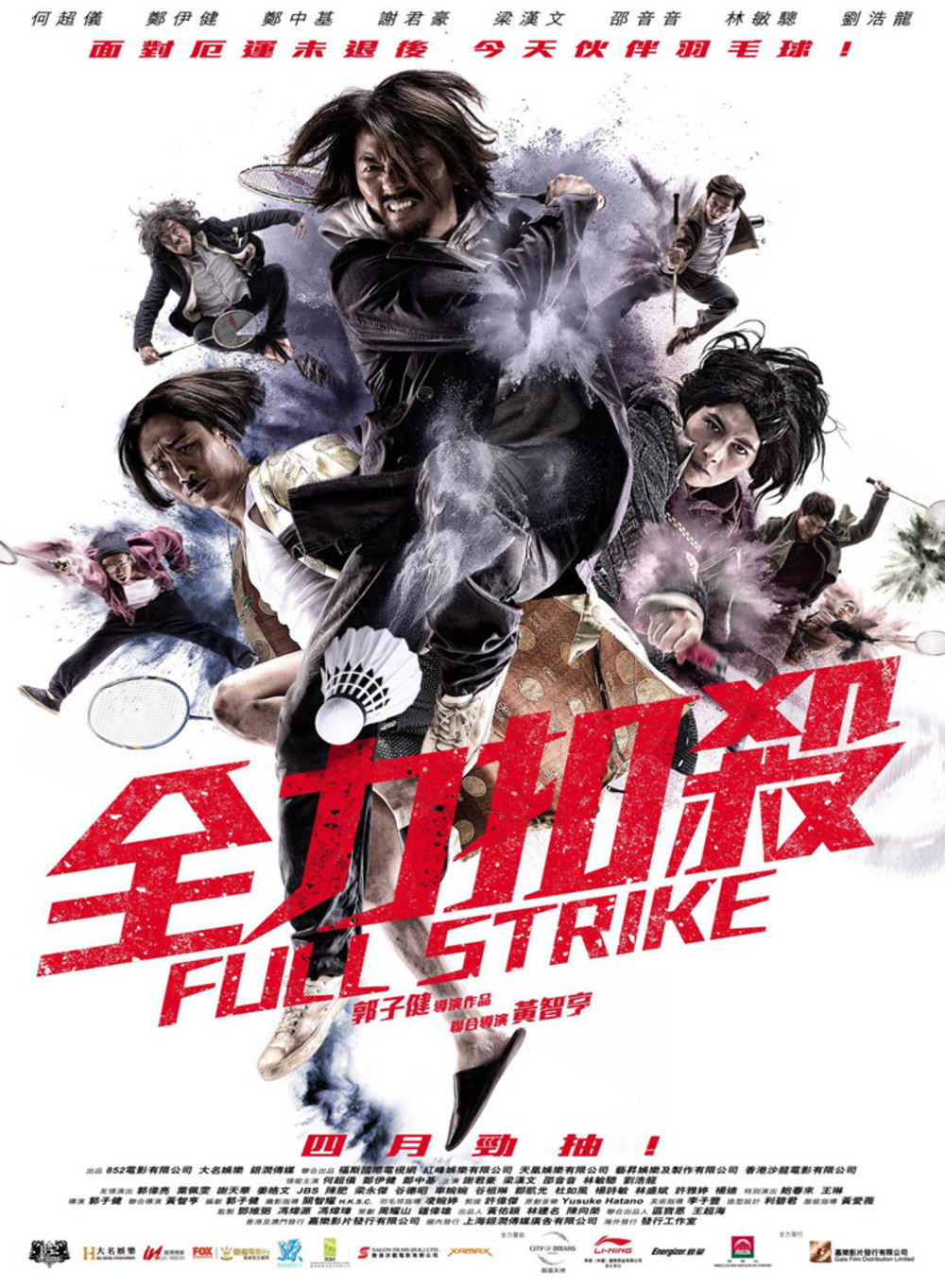
Derek Kwok and Henry Wong’s Full Strike does for badminton what Stephen Chow’s Shaolin Soccer did to soccer, that it to say power it with an anime sensibility, slather it in cartoonish excess, and inject it with martial arts film tropes. It tells of a disgraced, depressed badminton champion (Josie Ho), who after witnessing a shuttlecock-shaped meteor falling to earth, teams up with her grandmother (Susan Shaw), a trio of ex-cons looking to go clean (Ekin Cheng, Edmond Leung and Wilfred Lau), and their drunk coach (Lam Man Chung), to compete in a big badminton tournament, where her main rival is her cousin (Ronald Cheng). Full Strike has a lovable ensemble of actors : Ekin Cheng is getting more appealing with age, Josie Ho is an oasis of restraint among all the wackiness, Ronald Cheng does some of his best mugging, but Lam Man Chung is the highlight as a drunk, unpredictable coach that is both awesome and pathetic. The humor is zany but doesn’t muffle the trite but reasonably engaging emotional stakes. But the film’s problem is that there’s just not that much one can do with badminton onscreen. The directors struggle to make the matches interesting and spectacular, but in the end it all amounts to repetitive close-ups of CGI shuttlecocks, slow-mo reaction shots and un-involving wide angle views. Still, Full Strike is fun and unassuming entertainment. ***
Posted by LP Hugo on November 22, 2015
https://asianfilmstrike.com/2015/11/22/full-strike-2015-short-review/
CHRONICLES OF THE GHOSTLY TRIBE (2015) review
In an unexpected move, director Lu Chuan has made his fifth film an effects-heavy blockbuster far-removed from the arty and often demanding works that made him a justly celebrated auteur and festival darling. His previous film, the long-delayed epic The Last Supper (2012), had suffered commercially both from its stone-cold arthouse leanings, and from being released months after a much more appealing film on the same topic, Daniel Lee’s White Vengeance (2012). And once again, with Chronicles of the Ghostly Tribe, Lu Chuan found himself directing one of two competing films, both based on Tianxia Bachang’s 2006 best-selling novel Ghost Blows Out the Light, the other being Wuershan’s Mojin: The Lost Legend. This time however, Lu got his film out of the gate first, and by the same token his first major commercial hit. Though set earlier than the Wuershan film in the book’s chronology, Chronicles of the Ghostly Tribe isn’t a prequel: it’s a rival adaptation with an entirely different backing, creative team and cast, as well as a wildly different approach to the source material.
Posted by LP Hugo on November 15, 2015
https://asianfilmstrike.com/2015/11/15/chronicles-of-the-ghostly-tribe-2015-review/
HEAT TEAM (2004) short review
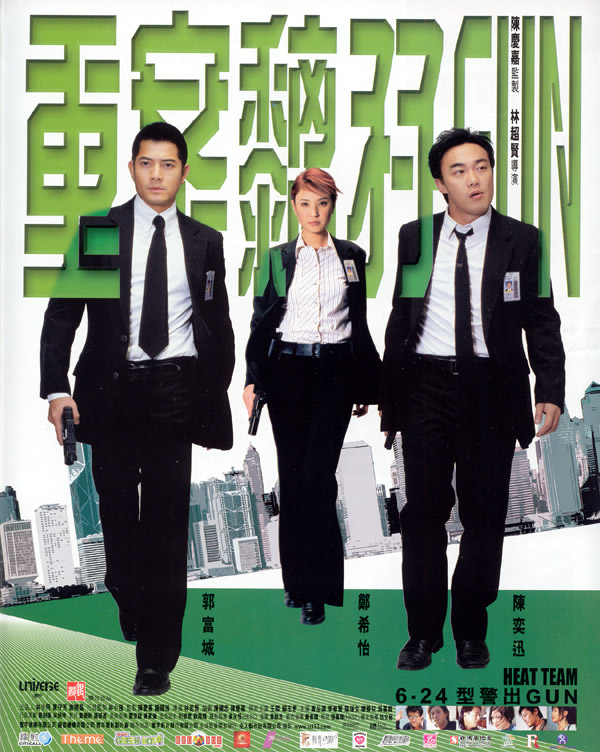
Dante Lam’s Heat Team is an action-comedy based solely on the passable chemistry between Aaron Kwok and Eason Chan, with the plot a vaguely convoluted afterthought, and the runtime already overlong at 95 minutes. The film follows two Interpol agents – one righteous and earnest (Kwok), the other a smarmy womanizer (Chan) – as they track down a jewel thief. Well, that’s the through line at least. There are countless digressions as the two cops bicker and flirt with their attractive colleague (Yumiko Cheng), indulge in dick-measuring contests (like determining who’s the best shooter with a paintball match in the office, or who can eat the spiciest), try to ingratiate themselves with their chief (an amusingly self-deprecating Danny Lee), and at some point, come very close to french-kissing each other. Even the investigation is actually more of a random series of encounters, the most memorable being a hilarious Hui Shiu-Hung cameo. It’s a frustratingly unfocused film that’s rarely as cool or as funny as it seems to think, with a sprinkling of action scenes that are average at best. Truly not the excellent Dante Lam’s proudest hour. **
Posted by LP Hugo on November 10, 2015
https://asianfilmstrike.com/2015/11/10/heat-team-2004-short-review/
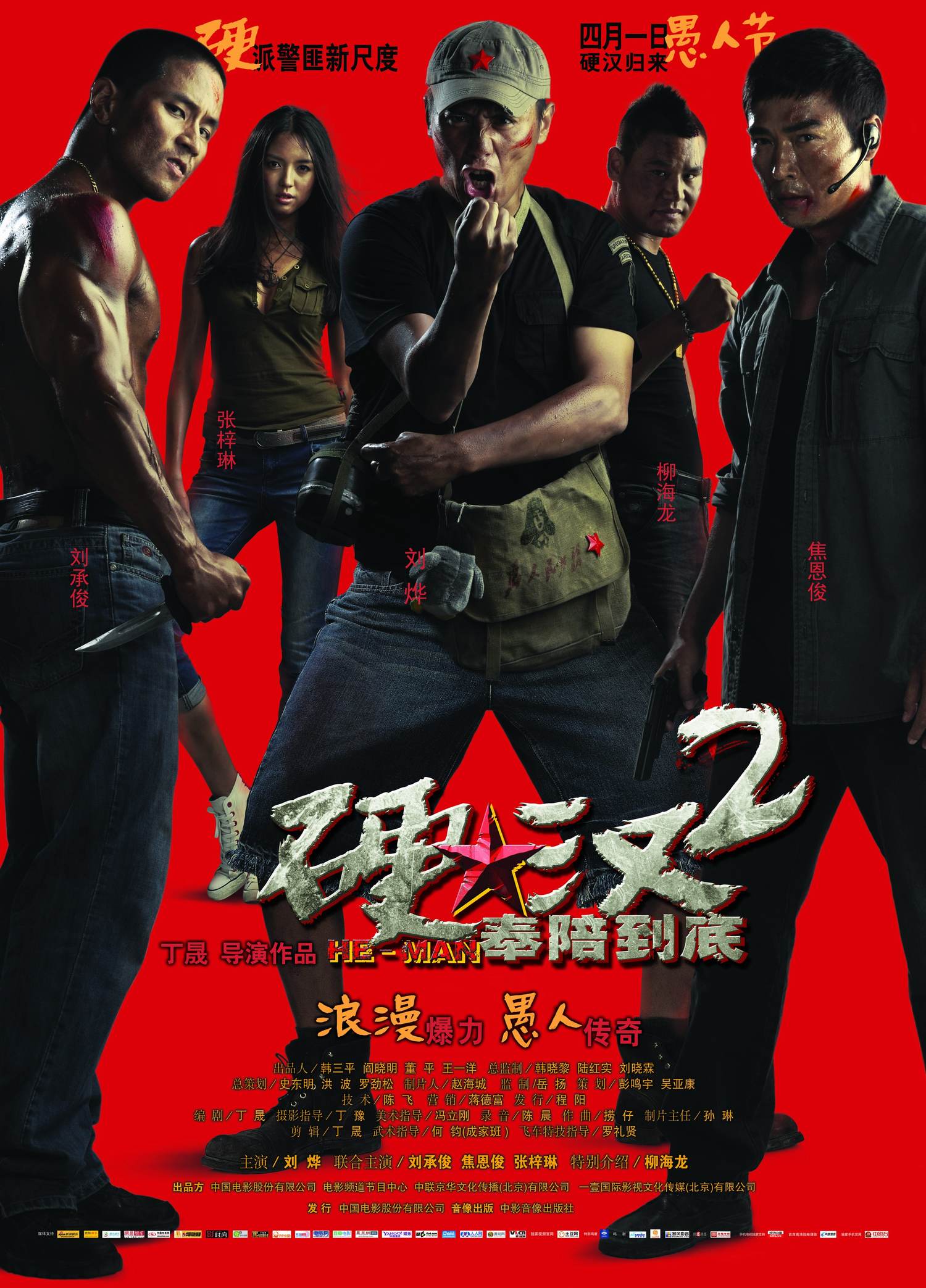
HE-MAN (aka THE UNDERDOG KNIGHT 2) (2011) review
He-Man was a surprising project from director Ding Sheng : a direct sequel to his 2007 action-comedy The Underdog Knight, which was an interesting but flawed little film that barely registered at the box-office. To follow up on this film more than four years later, and with a far less prestigious cast (Liu Ye returns, but Anthony Wong, Sun Honglei, Yu Rongguang and Yong You don’t, and there’s no one on their level here), was an unexpected move. But the thing is, sequels at best can be a way to fine tune a formula while returning to a compelling character or set of characters, and that is exactly what He-Man does. The Underdog Knight had the awkwardness of a directing debut, but He-Man shows the sure hand of a director who’s found his style and cut his teeth, namely with the funny and soulful Little Big Soldier.
Posted by LP Hugo on November 10, 2015
https://asianfilmstrike.com/2015/11/10/he-man-aka-the-underdog-knight-2-2011-review-2/