SHE SHOOTS STRAIGHT (aka LETHAL LADY) (1990) review

Joyce Godenzi, a former Miss Hong Kong of Sino-Australian descent, had a short career as a lead actress, before marrying Sammo Hung Kam-Bo in 1995 and retiring from the film industry. The few films she made as a lead actress were often associated with the successful Girls with Guns sub-genre of action cinema, which in the late eighties and early nineties had people like Michelle Yeoh, Cynthia Khan or Kara Hui as its most famous faces. Her best-known film remains Corey Yuen’s She Shoots Straight, in which she plays a career-oriented policewoman who marries Tsung-Pao (Tony Leung Ka Fai), the only son in the Huang family. She has to face the resentment of her husband’s four sisters, (all of them cops under her command, which makes things more complicated) who do not approve, among other things, of her unwillingness to have a baby just yet. The elder sister Ling (Carina Lau) is also defiant of Mina’s authority on the force, and enraged that her own mother and brother are siding with Mina in every argument. At the same time, they have to put their differences aside to stop a gang of Viet-namese criminals (headed by the great Yuen Wah) on a crime spree through Hong Kong. Sammo Hung Kam-Bo endearingly crops up from time to time, surely to show his future wife some support (he’s also a producer on this film).

Read the full post »

A CHINESE FAIRY TALE (aka A CHINESE GHOST STORY) (2011) review

Remaking Ching Siu Tung’s 1987 fantasy love story A Chinese Ghost Story was a bold move. The original is still a reverred classic, featuring a legendary screen couple in the person of the late Leslie Cheung and the now-retired Joey Wong, some of Ching Siu Tung’s most inventive choreography, and an effectibe blend of romanticism, tragedy and comedy, with crappy but well meaning special effects and a very popular soundtrack. It gave way to two sequels and a whole wave of fantasy love stories. A remake was always going to face a very tough challenge, especially since the legendary Leslie Cheung committed suicide in the early 2000’s, which adds a sheen of intensely emotional nostalgia to all his greatest successes.

Demon hunter Yan (Louis Koo in the role made famous by Wu Ma) fell in love years ago with demon Siu Sin (Liu Yifei replacing Joey Wong), but due to the forbidden nature of their union, had to leave her after suppressing her memories. Years later, naïve scholar Ning (Yu Shaoqun trying to fill the shoes of Leslie Cheung) is searching the forest trying to find a water source for a small village suffering from a drought, when he comes across a temple where he encounters life-sucking demons, one of whom is none other than Siu Sin. They fall in love with each other as she spares his life, thus finding herself hunted by her fellow demons. Things get more complicated when Yan re-emerges, setting demons, demon hunters, villagers and lovers on a collision course.

Read the full post »

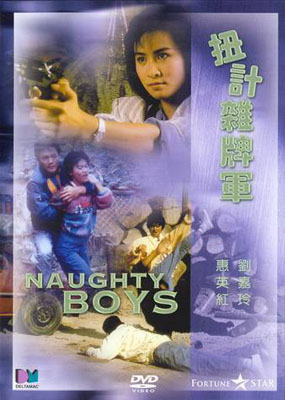
NAUGHTY BOYS (1986) short review

An amateurishly plotted, not even sporadically funny comedy that inexplicably casts Mars as its lead (great stuntman, not good actor) and the lovely Kara Hui as a plain jane (really?) to Carina Lau’s alpha-female. Logic is absent, the gags are uninspired, and the action (supervised by Jackie Chan’s Stunt Team) is only interesting when Hui gets in on it. The plot involves a hidden loot and a hapless idiot (Mars) hunted by his ex-partners in crime, fresh out of prison (and headed by Phillip Ko). There is a literally blink-and-you’ll-miss-it cameo by Jackie Chan (a cameo predictably blown to deceitful proportions in the film’s DVD advertising), but in the end the only thing that sticks in the mind is a short outtake at the end where Jackie Chan demonstrates a dicy stunt to Kara Hui, who replicates it to perfection. *

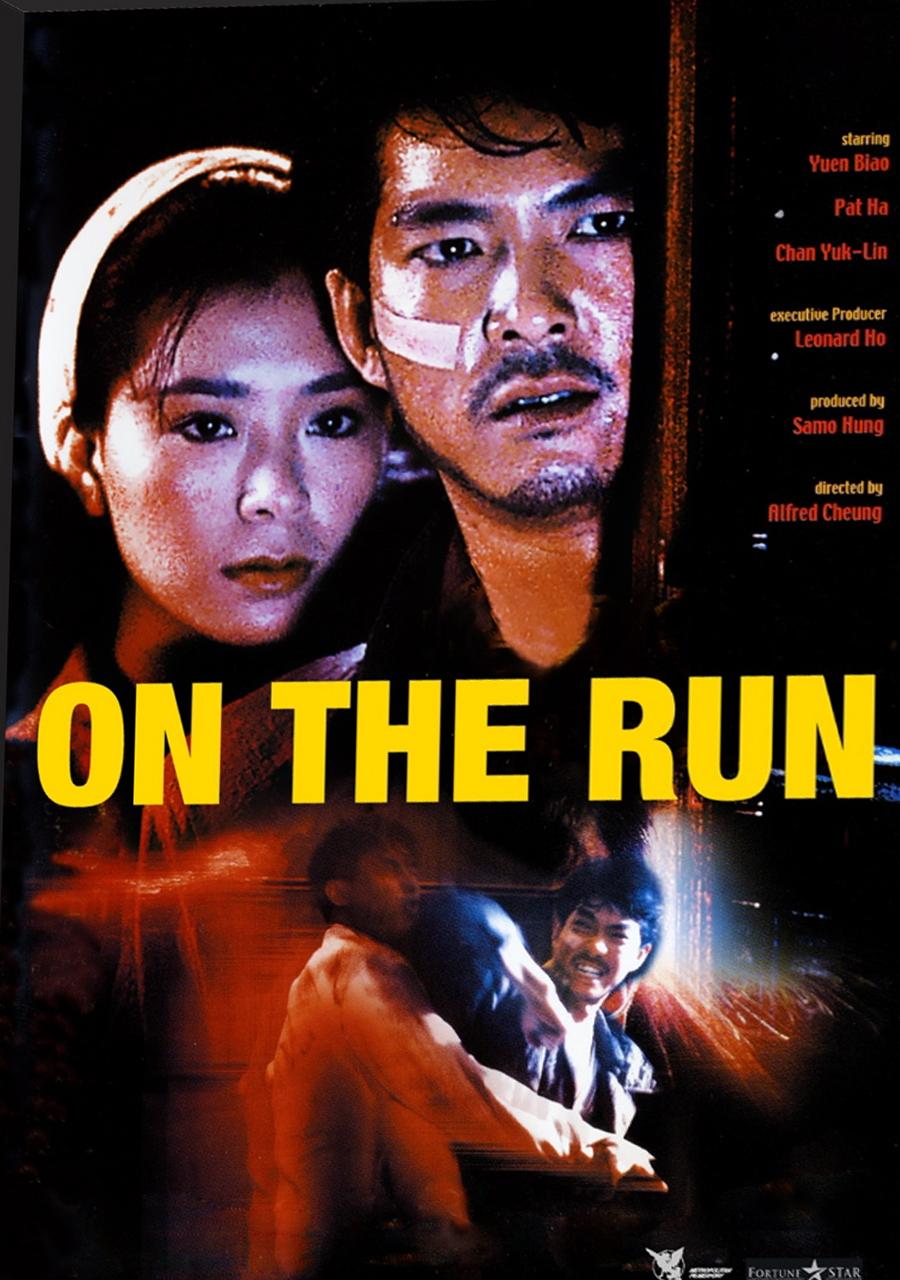
ON THE RUN (1988) review

Heung Ming (Yuen Biao), is a down-on-his-luck cop who is looking to emigrate to Canada to start anew. But when his ex-wife is killed for digging too much into a case of corruption involving the head of Criminal Police, Lu (Charlie Chin), he finds himself accused of the murder and chased with his young daughter through night-time Hong Kong by Lu’s squad of corrupt cops (Lo Lieh, Yuen Wah and Phillip Ko). Through a bizarre but inevitable twist of fate, he finds that his only ally is Pai (Pat Ha), the very person who killed his ex-wife.

Casting against type can be a cheap way of bringing a sense of novelty to well-worn formulas, but when made right it can also be, as in the case of On The Run, a powerful way of taking the audience aback and hitting harder in the dramatic stakes. The director himself, Alfred Cheung, was and is still better-known for his comedies, and for him to direct such an unflinching noir thriller, is kind of like if Jon Turteltaub was the director of There Will Be Blood. But credit where it’s due : Cheung directs not only with a firm hand, but also with a great eye for dark humor and shocking turns of events. The pace is crisp, with taut, realistic action scenes that are made more hard-hitting not by trying to be too spectacular, but through striking details such as the hitwoman’s almost uncanny ability to kill anyone she fires at with a single, perfectly aimed headshot, even if that person is using a child as a human shield. The gripping pace of brief shootouts and blistering chases only ever lets up for strangely mesmeric interludes, as when Pai, the hitwoman, takes advantage of a moment of respite in a hideout to coyly try on a dress she’s bought before everything went to hell.

Read the full post »

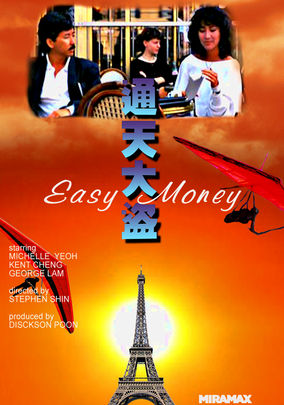
EASY MONEY (1987) review

Easy Money was Michelle Yeoh’s final film before she went into early retirement to dedicate herself to her marriage with Dickson Poon (who had been her producer via D&B Films on most of her films up to then). That didn’t quite work out and five years later she was back in business, new and improved, making quite the splash by upstaging Jackie Chan in Police Story 3. So this is the last film featuring that former incarnation of Yeoh : a more round-faced, girly-looking actress, already very beautiful and stunt-ready, but not quite as well-rounded a performer, especially in the dramatic department.

Easy Money is actually a thinly-veiled remake of The Thomas Crown Affair, with the spin of a gender-switch : Michelle Yeoh is the gentleman-thief figure formerly played by Steve McQueen and Pierce Brosnan ; former crooner George Lam takes the Faye Dunaway/Rene Russo role of the insurance investigator who gets drawn into a web of deceit and seduction that is half of his making. Kent Cheng is the dogged cop in charge of investigating a multi-million-dollar heist, thus taking the Paul Burke/Dennis Leary role : no gender-switching for this character, merely a waist-enhancing.

Read the full post »

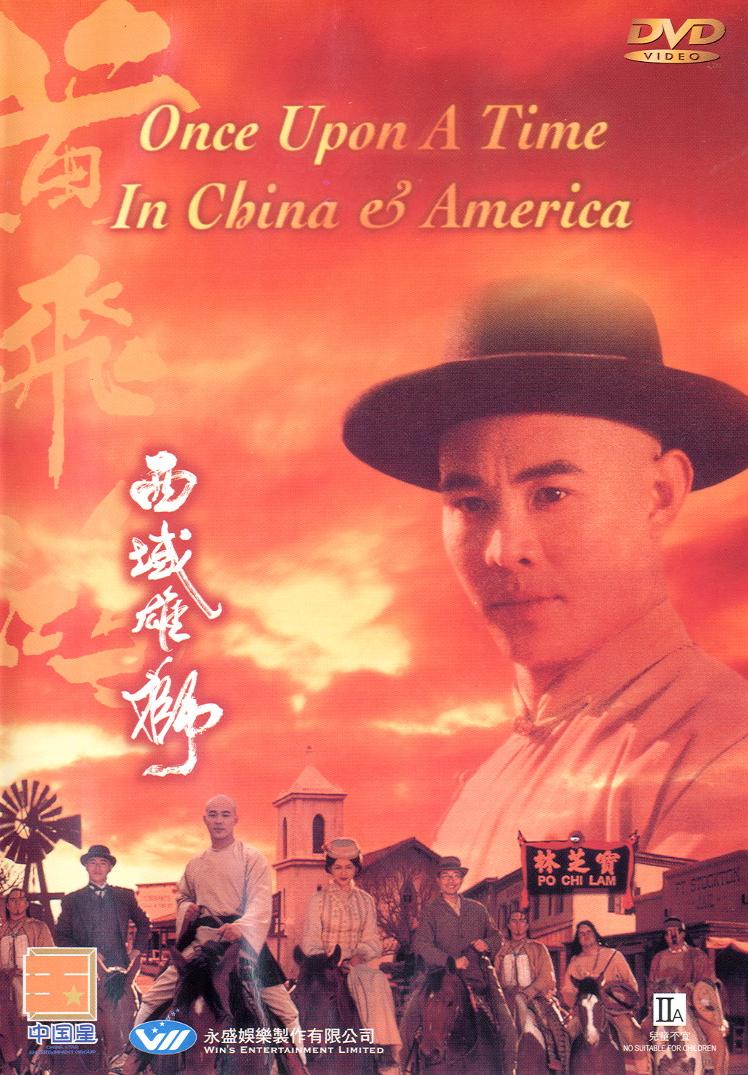
ONCE UPON A TIME IN CHINA AND AMERICA (1997) review

After his dispute with director Tsui Hark led to his leaving the Once Upon A Time In China franchise and being replaced by Vincent Zhao in the following two films, Jet Li finally came back to his signature role of Wong Fei-Hung in this fifth sequel, directed by Sammo Hung Kam-Bo and produced by Tsui Hark himself. In Once Upon A Time In China And America (heretofore OUATICAA), we meet Wong Fei-Hung in the American far west, on a carriage headed to a small town where his disciple Bucktooth is founding a clinic (named Po-Chi Lam, after Wong’s own clinic in China). With him are franchise regulars Aunt Yee (Rosamund Kwan) and Clubfoot (Xiong Xin Xin). On their way they help out Bill (Jeff Wolfe) a stranded cowboy, who develops a growing sympathy for the Chinese, which is not the case of everyone else in the town, the Chinese immigrants being endlessly segregated and submitted to arbitrary restrictions. But when the carriage is attacked by Indians, Wong hits his head on a rock while trying to rescue Aunt Yee, and his body goes adrift in the nearby river. When he wakes up, he’s in an Indian village and has lost his memory. The plot thickens as a wolf-loving outlaw and his gang rob the town’s bank and the law turns to the Chinese immigrants as scapegoats.

Read the full post »

INNER SENSES (2002) review

The worldwide triumph of The Sixth Sense in 1999 led to a wave of horror films from everywhere, trying to be as narratively clever, emotionally grounded and atmospherically potent as M. Night Shyamalan’s masterpiece. Of course, Hong Kong tried its hand at it, but while its most famous outing in this genre was undoubtebly The Pang brothers’ The Eye in 2002, Law Chi Leung’s Inner Senses pre-dates it by a few months and beats it by a few notches in quality. It has the tragic distinction of being superstar Leslie Cheung’s last film before his suicide in 2002, aged only 46. The suicide note he left pointed towards some kind of long-lasting, hidden sense of despair, which happens to find an eerie echo in film’s plot.

Read the full post »

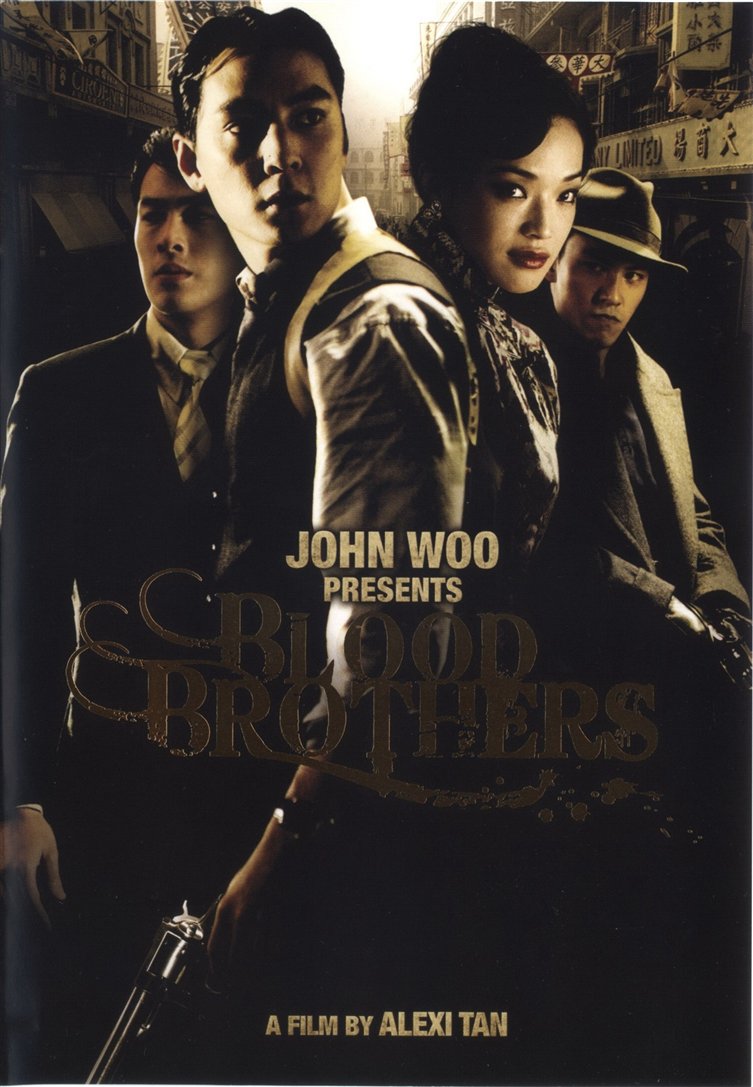
BLOOD BROTHERS (2007) review

Alexi Tan’s Blood Brothers has been called a remake of John Woo’s Bullet in the Head, but it is really more of a “partquel” if you will, in that it only reworks a segment of the original, and even then, it reworks it pretty loosely. The plot points that remain are mainly the three friends (here, Daniel Wu, Liu Ye and Tony Yang) leaving their hometown to try their luck in the world (here, in Shanghai), and getting violently estranged by fate, one of them going bad and working for the mob. Carried over from John Woo’s film are also the beautiful singer (here, Shu Qi) and the mysterious killer (here, Chang Chen). The similarities stop there, as Alexi Tan’s film goes in a different direction entirely with this set of characters. So the three friends (actually two brothers and a friend) come to Shanghai where they get work in a fancy nightclub held by a charismatic but cruel mob boss (Sun Honglei). Things go bad when one of the friends (Liu Ye) starts going to seed and showing a proclivity for killing, and another (Daniel Wu) falls in love with the mob boss’ trophy girlfriend (Shu Qi), who is herself having an affair with one of his enforcers (Chang Chen).

Read the full post »

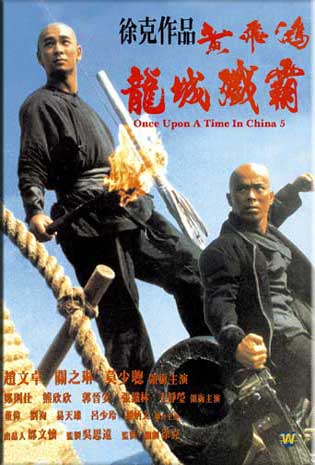
ONCE UPON A TIME IN CHINA 5 (1994) review

  Jet Li’s departure from the Once Upon A Time In China series that had made him a superstar didn’t stop producer/director Tsui Hark from proceeding with the franchise, thus recasting the central character of Wong Fei-Hung with another Mainland Wushu champion, Vincent Zhao. This led to a fourth episode, directed by a Yuen Bun, that ended up being far less successful than any of the Jet Li installments. It did have fixtures of the franchise like Max Mok’s Leung Fu or Xiong Xin Xin’s Clubfoot, but the absence not only of Jet Li, but also of Rosamund Kwan’s Aunt Yee, another major character in the franchise, coupled with uninspired direction, made it look like a bargain bin iteration of the Chinese hero’s adventures. And so for the fifth episode, Tsui Hark returned to the director’s chair, signed his protege for the lead role again, managed for Rosamund Kwan to return, but more importantly tweaked the formula of the series a little bit by making it more akin to a serial, mostly by including pirates and a treasure into the mix.

Read the full post »

THE INSPECTOR WEARS SKIRTS (1988) review

Also known as Top Squad in some countries, The Inspector Wears Skirts was very successful when it came out in 1988, starting a franchise that would yield four films, the first two being produced by Jackie Chan. Three of the four episodes star Sibelle Hu as Madam Wu, an instructor for an elite squad comprised only of women, nicknamed the amazones, and who are supposed to take on missions men can’t, their advantage being based on the fact that women are not usually expected to be elite agents (at least at the time), which can prove useful in situations such as infiltrating a hostage situation. Therefore young women are selected to go to a boot camp under the hard supervision of Madam Wu. All this set up is of course little more than a pretext to get a dozen attractive actresses in a situation of competition and cohabitation, with the added sexual tension brought by the fact that an all-male squad is being trained in the same premises, under the direction of Stanley Fung.

Read the full post »