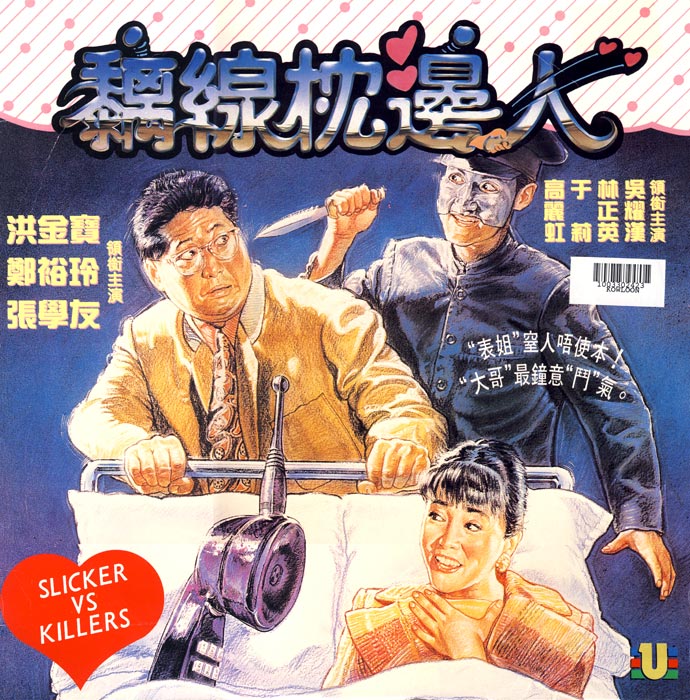
SLICKERS VS KILLERS (1991) short review

SlickersVsKillers

Success Hung (Sammo Hung) is an accomplished phone salesman whose world is turned upside down in a matter of days as his wife (Yu Li) starts cheating on him with a young policeman (Collin Chou), while a fierce rival (Carol ‘Dodo’ Cheng) is assigned by his company to work with him, and he witnesses the murder of a mobster (Tommy Wong Kwong Leung) by two deranged hitmen (Jacky Cheung and Lam Ching Ying). Despite a enticing cast (Joyce Godenzi also stars as Hung’s therapist, while Richard Ng cameos as one of his customers), and Sammo Hung’s impressive credentials as a director, Slickers vs. Killers is scattershot and unfunny, basing its comedy on shrill, interminable bickering and an uncomfortable amount of jokes about rape. There’s too little action to relieve the comedy’s shortcomings, and the subplot involving Jacky Cheung’s demented murderer is jarringly dark. But most damningly, it all revolves around a set of wholly unlikable characters that are either selfish, deluded, deranged or all of the above, with the exception of the therapist played by Joyce Godenzi, who proves what a well-rounded performer she was by showing a lighter, more offbeat side to her usually steely persona. *1/2
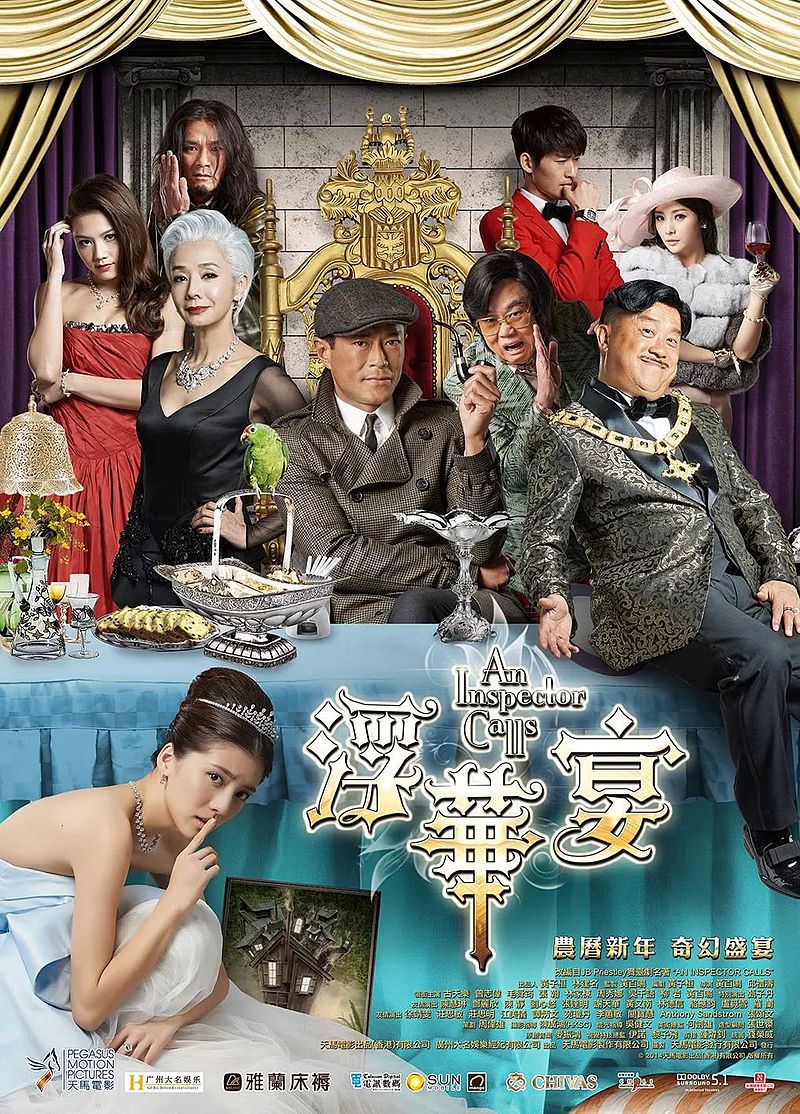
AN INSPECTOR CALLS (2015) review

an_inspector_calls

Considered a true classic of 20th-century English theatre, J.B. Priestley’s three-act play An Inspector Calls has been brought to the stage countless times since it was first performed in 1945, and it’s been a fixture of the BBC’s TV and radio programming (with yet another mini-series in preparation for 2015, starring David Thewlis) but it has comparatively been the object of few big screen adaptations. In fact, Raymond Wong and Herman Yau’s film is the first time the play is adapted for theatrical release since Guy Hamilton’s (of Goldfinger fame) 1954 adaptation. And surely it’s the most unexpected iteration of the story since the 1979 Soviet mini-series Inspector Gull. Screenwriter Edmond Wong transposes the setting from the North Midlands of Great Britain in 1912 to Hong Kong in 2015, but follows J.B. Priestley’s narrative pretty closely : the mysterious inspector Karl (Louis Koo) pays an unexpected visit to the rich Kau family’s estate. Mr. and Mrs. Kau (Eric Tsang and Teresa Mo) are in the final preparations for their daughter Sherry’s (Karena Ng) engagement party as she is soon to marry a handsome young businessman Johnny (Hans Zhang), while their son Tim (Gordon Lam) looks on in contemptuous bemusement, and clearly annoyed at his own girlfriend, socialite Yvonne (Ada Liu Yan). Inspector Karl informs them that a young woman (Chrissie Chau) from Mr. Kau’s factory has been found dead from what appears to be a painful, protracted suicide by disinfectant ingestion. As he starts to interrogate each member of the family in turn, it appears everyone of them was linked to the deceased woman, and everyone may have played a more or less active role in her eventual demise.

(more…)

LICENCE TO STEAL (1990) short review

LicenseToSteal_DongFangXu_SC36 In Billy Chan’s Licence to Steal, a cat burglar (Joyce Godenzi) is betrayed by her partner (Agnes Aurelio) and sent to prison for three years. Upon her release, she aims to get revenge on the double-crosser, and teams up with a dogged cop (Richard Ng), his young partner (Collin Chou) and his idealistic, slightly unhinged nephew (Yuen Biao). Licence to Steal avoids the numbing effect of overabundant action, as well as the annoyance of crass humor. It is often, as so many films of that time and place, too scattershot in its progression to really engage, but the cast is uniformly appealing, from the always classy and charismatic Joyce Godenzi to Yuen Biao playing a variation on his irresistible Dragons Forever role, not to mention the always funny and reliable Richard Ng. The fights, as choreographed by Corey Yuen, are brisk and delightful, if often frustratingly short : there’s a one-minute, dizzying bout between Yuen and Chou, that should have gone on at least four more minutes. And the same year as their savage, thundering fight in She Shoots Straight, Godenzi and Aurelio get a re-match in a masterful, stealthy fight in a warehouse, where they go at each other while avoiding being seen or heard by patrolling guards. A very pleasant action comedy.  ***

ZHONG KUI : SNOW GIRL AND THE DARK CRYSTAL (2015) review

Snow-Girl

A prominent figure of Chinese mythology, the rotund and ugly but very powerful demon hunter Zhong Kui has surprisingly not had many film incarnations in the past decades. There was a female version of the character (played by Cheng Pei Pei, and thus not exactly rotund and ugly) in Ho Meng Hua’s The Lady Hermit in 1971, and Wu Ma directed and starred in a version of the myth in 1994’s The Chinese Ghostbuster, which transplanted the character as a fish out of water in 20th century Hong Kong. There has also been a few TV series, but Zhong Kui : Snow Girl and the Dark Crystal is definitely the character’s first blockbuster incarnation, and given the film’s success during the 2015 Chinese New Year period, it’s unlikely to be the last. Directed by Peter Pau, who’s been more celebrated as a cinematographer – a position which he occupies on this film too – than as a director (his last directorial effort was the messy Michelle Yeoh vehicle The Touch in 2002), and Zhao Tianyu, who until now had been a director of much more low-key fare (like 2008’s culinary thriller Deadly Delicious), it incongruously yet somewhat inevitably casts a handsome – some would say pretty – star in the title role, where one would have logically yet somewhat unrealistically expected a more corpulent and rugged actor like Jiang Wu or Zhang Jinsheng.

(more…)

THE OUTLAW BROTHERS (1990) short review

53816_441993595837743_1994586597_o

James and Bond (Frankie Chan and Max Mok) are professional luxury car thieves who get caught between a mobster (Kong Do) who wants to exploit their gift, and a cop (Yukari Oshima) who’s bent on arresting them, with the help of her lovestruck underling (Michael Miu in a fun turn). Though the title suggests a focus on Frankie Chan (who also directs) and Max Mok’s characters, they are very often sidelined in favor of Yukari Oshima’s character and her cat and mouse flirting with Chan. The plot, or lack thereof, wanders aimlessly, springing the great Michiko Nishiwaki as a kind of black widow in the last 30 minutes, and breaking its lull of tame comedy with an impressive action finale in, wait for it, a warehouse. But The Outlaw Brothers is mostly a showcase for Oshima, who displays not only charisma and lightning moves, but also a lighter side that her often brutal roles at the time didn’t show, and the same goes for Nishiwaki, who doesn’t fight much but is gleefully flamboyant. Frankie Chan and Max Mok may be the outlaw brothers, but Yukari Oshima and Michiko Nishiwaki are the reason to watch The Outlaw Brothers. **1/2

CHOY LEE FUT (2011) review

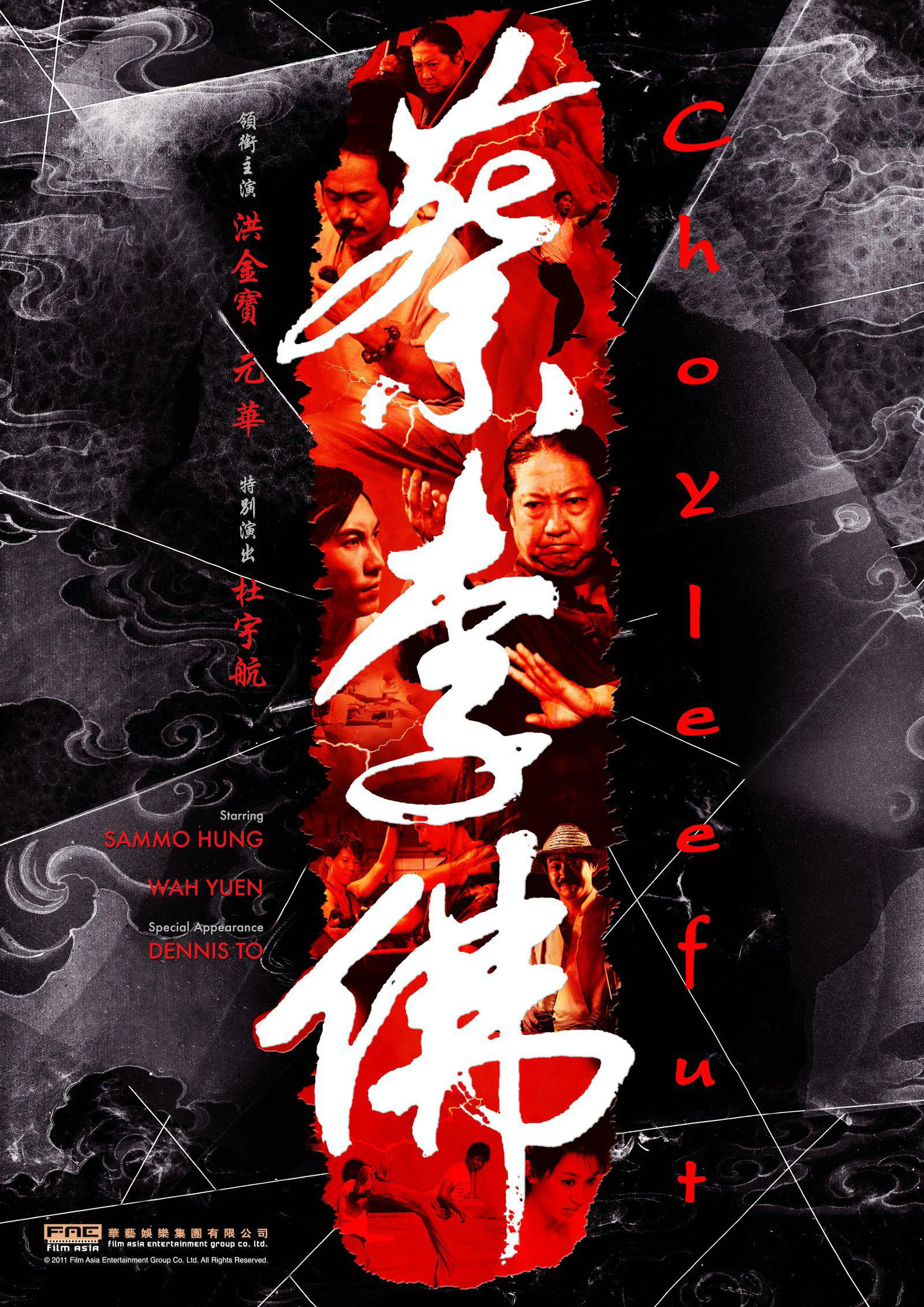
choy-lee-fut In 2001, two films focused on the widely practiced (in China at any rate) martial art known as Choy Lee Fut ; two films films which taken together say less about their subject than 10 minutes of Ip Man conveyed about Wing Chun. Of the two, John Ching’s Choy Lee Fut Kung Fu is the superior film, simply by dint of being funny on purpose. Tommy Law and Sam Wong’s Choy Lee Fut on the other hand, doesn’t seem to realize it’s laughable. Its unbelievably standard storyline concerns a young man (Sammy ‘son of Sammo’ Hung) who moves from London to China with his friend (Kane ‘son of Sho’ Kosugi) in order to learn Choy Lee Fut in a school owned by his father (Sammo Hung) and headed by his uncle (Yuen Wah). But just as they arrive, they are told that the school is about to be bought by a mega-conglomerate, and that the only way to keep ownership of it is to win a martial arts tournament a month later.

(more…)

WHO IS UNDERCOVER (2015) review

093852.28846658_1000X1000

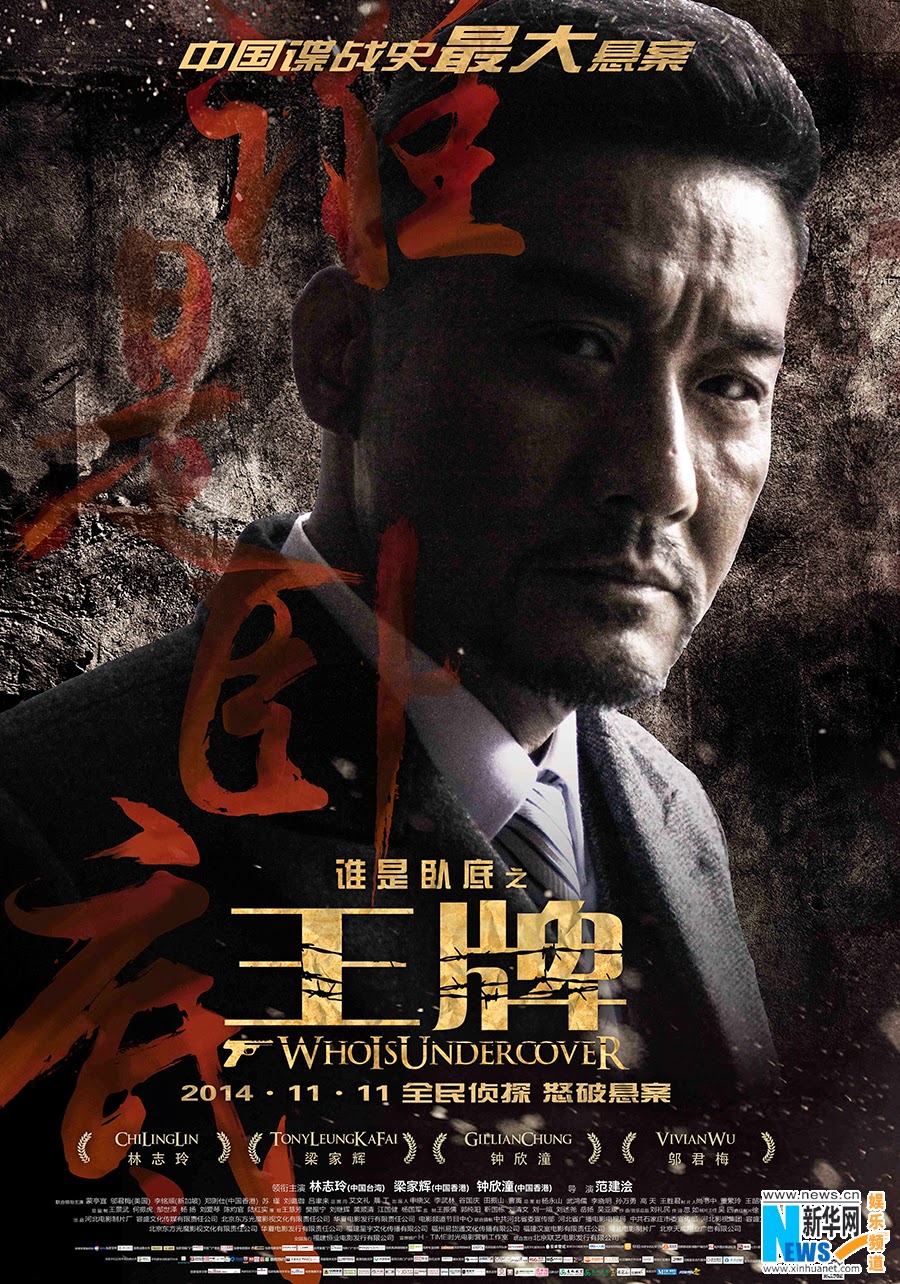
Fan Jianhui’s Who is Undercover cashes in on the success of classy and starry Chinese spy thrillers like Alan Mak and Felix Chong’s The Silent War or Gao Qunshu and Chen Kuo Fu’s superb The Message, with a story that borrows heavily from the latter film (though set slightly earlier in Chinese history).  In 1934, the secret services of the Kuomintang government round up suspects (including Lin Chi Ling and Gillian Chung) in a military base and torture them in an attempt to identify the undercover communist agent among them while on the outside, the head of the underground communist party (Tony Leung Ka Fai) tries to control the damage and free his agent, known under the codename “The Joker”. Beyond a shared premise, Who is Undercover is often so strikingly similar to The Message that there’s more than a whiff of plagiarism about it. The way the story unravels (with a mix of tragedy and mystery, regular torture scenes, an emphasis on coding and constant twists and scenes replayed in flashbacks to reveal their true meaning), the arc and hidden identity of some of the main characters, and key plot points (which we won’t reveal not to spoil either film) are exactly the same. A few scenes are basically transpositions of ones found in The Message, striking the same dramatic beats with the same narrative or visual tricks. At some point there’s even a key line of dialogue that is a verbatim repetition of one heard in the 2009 film, carrying the same implications. In the end, there’s enough differences that it doesn’t constitute a remake, but enough similarities that it feels redundant and borders on shameless copying.

(more…)

THEY CAME TO ROB HONG KONG (1989) short review

TheyCametoRobHongKong+1989-2-b

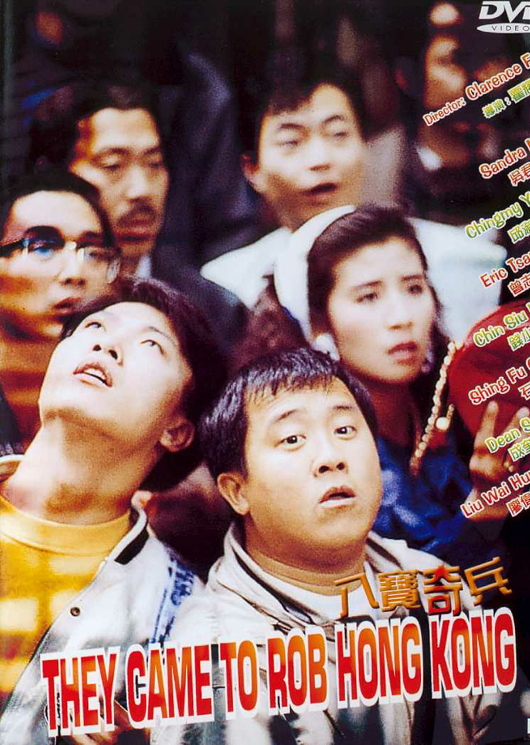
Clarence Fok’s They Came to rob Hong Kong concerns a violent bank robber (Roy Cheung) who has to flee to the Mainland after being nearly caught by a tough cop (Kara Hui). There, he recruits a ragtag team of hapless morons (among which Eric Tsang, Stanley Fung, Sandra Ng, Dean Shek and Chin Siu Ho) to come back to Hong Kong and attempt a daring heist. Except they’re hapless morons, so nothing goes according to plan. This film is actually a complete rehash of any Lucky Stars film : even though only Fung and Tsang were actually members of the comedic team, other members of the cast fit the usual Lucky Stars profiles, as Chin Siu Ho brings the martial arts that would’ve been Sammo Hung’s turf, and Dean Shek has the same kind of paranormal pretensions that Richard Ng’s character would display. The structure is also the same : an action-packed opening sequence (in this case an impressive and savage fight and chase scene on cluttered rooftops, as the terrific Kara Hui hunts down Roy Cheung) gives way to a comedic middle-section where, among other subplots, the group is given a beautiful woman to lust after (in this case, Chingmy Yau), after which things are wrapped up in a big action finale. Except while the action bookends are fine, the comedic middle is painfully unfunny and interminable. While Eric Tsang is always hilarious, Sandra Ng’s shtick quickly gets wearisome, and the ensemble simply doesn’t have the Lucky Star’s chemistry. **

THIS GIRL IS BADASS (aka JUKKALAN) (2011) review

81PruVDzygL

The budding Thai martial arts star Jeeja Yanin’s third and latest film as a lead, This Girl is Badass was directed and co-stars Petchtai Wongkamlao, a popular Thai comedian best known worldwide as Tony Jaa’s comic relief in the Ong Bak and Tom Yum Goong films. JJ plays Jukkalan, a bike delivery girl who runs afoul of rival mobsters who hired her and whose dirty money she kept for herself. But this short plotline accounts only for a small fraction of the film’s scenes (mostly the action scenes). The bulk of the film actually focuses on Jukkalan’s world : her uncle Sawang (Petchtai Wongkamlao), who secretly pines for a pretty widow (Siriporn Eiamsuk) whose late husband he actually assassinated in his violent and unspoken past (this sounds somber but is treated in a very matter-of-fact way in the film, and never addressed when the two get closer) ; her boss Samureng (Akom Preedakul), a good-natured weirdo with a knack for outrageous outfits ; Duan (Chalerm Yamchamang), a lovesick and awkward boy who loves her but can’t seem to catch a break ; and, among a few others, Pong (Athit Amonwet) the boy she loves, but who she finds out is actually more interested in ‘elephant fights’ (we’ll let you guess or discover what that means).

(more…)

IRON ANGELS 2 (aka ANGELS 2) (1988) short review

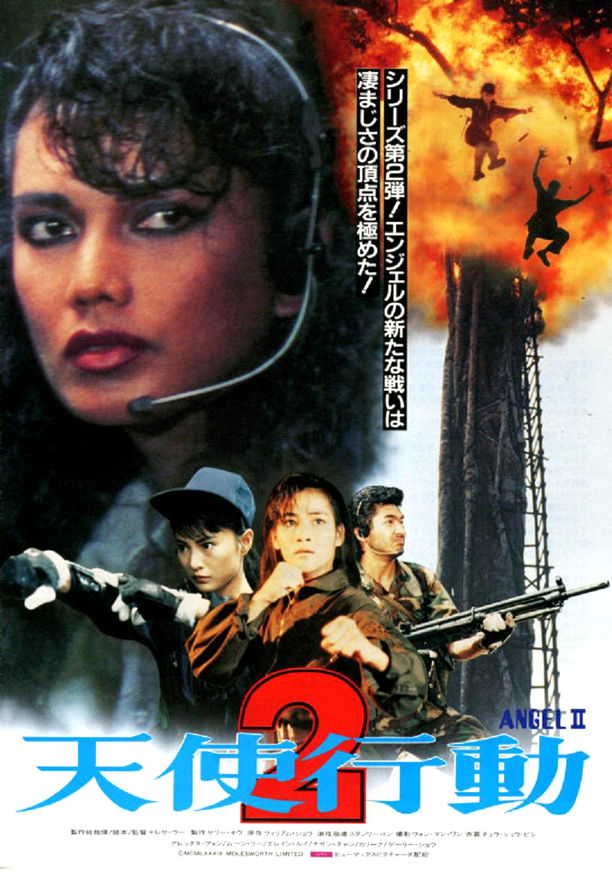
Angel-II-1988 The very first directorial effort of Stanley Tong, who went on to become one of Jackie Chan’s directors of choice with films like Police Story 3 : Supercop and Rumble in the BronxIron Angels 2 sees the the return of the titular “angels”, elite mercenaries played by Moon Lee, Elaine Lui and Alex Fong, with the notable absence of David Chiang who played their boss in the first film but with the notable addition of Kharina Sa, a strikingly stunning panther of a woman with no backstory and little dialogue. This time they’re vacationing in Malaysia, where they meet Alex’s lifelong friend Peter, who’s become a wealthy businessman. But just as Elaine starts to fall for him, the Angels realize that he’s actually a wannabe-dictator with a small army of his own, and that they have to stop him. Similar to the first film, Iron Angels 2 features surprisingly little action for much of its runtime, a fact that is disappointing considering this is a film so crudely plotted that the villain’s evil ambitions are revealed with a scene of him watching archive footage of Hitler. But again like the first film, it all ends with almost half an hour of intense action, in this case a relentless Rambo-inspired jungle-set action scene, with Alex Fong carrying out a one-man ambush on dozens of soldiers, Moon Lee taking on Yuen Tak (who also choreographs the action) in a furious fight, and Elaine Lui gunning down henchmen while hanging from a zip line. It’s a superbly bombastic and exciting piece of action directing and fearless stuntwork (witness Moon Lee’s un-doubled narrow escape from an exploding watchtower, the lady has guts), a reward to the audience for sticking through one hour of fairly uninvolving drama. **1/2