EASY MONEY (1987) review

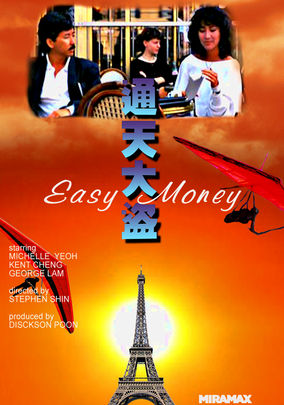
Easy Money was Michelle Yeoh’s final film before she went into early retirement to dedicate herself to her marriage with Dickson Poon (who had been her producer via D&B Films on most of her films up to then). That didn’t quite work out and five years later she was back in business, new and improved, making quite the splash by upstaging Jackie Chan in Police Story 3. So this is the last film featuring that former incarnation of Yeoh : a more round-faced, girly-looking actress, already very beautiful and stunt-ready, but not quite as well-rounded a performer, especially in the dramatic department.

Easy Money is actually a thinly-veiled remake of The Thomas Crown Affair, with the spin of a gender-switch : Michelle Yeoh is the gentleman-thief figure formerly played by Steve McQueen and Pierce Brosnan ; former crooner George Lam takes the Faye Dunaway/Rene Russo role of the insurance investigator who gets drawn into a web of deceit and seduction that is half of his making. Kent Cheng is the dogged cop in charge of investigating a multi-million-dollar heist, thus taking the Paul Burke/Dennis Leary role : no gender-switching for this character, merely a waist-enhancing.
(more…)

ONCE UPON A TIME IN CHINA AND AMERICA (1997) review

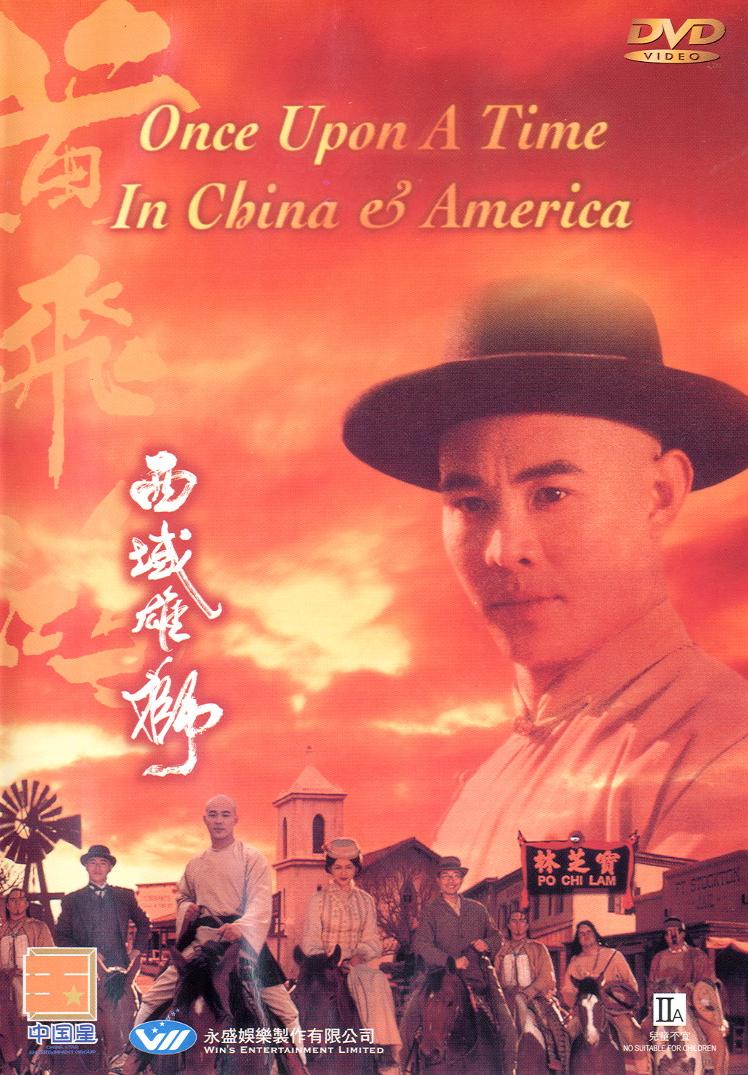
After his dispute with director Tsui Hark led to his leaving the Once Upon A Time In China franchise and being replaced by Vincent Zhao in the following two films, Jet Li finally came back to his signature role of Wong Fei-Hung in this fifth sequel, directed by Sammo Hung Kam-Bo and produced by Tsui Hark himself. In Once Upon A Time In China And America (heretofore OUATICAA), we meet Wong Fei-Hung in the American far west, on a carriage headed to a small town where his disciple Bucktooth is founding a clinic (named Po-Chi Lam, after Wong’s own clinic in China). With him are franchise regulars Aunt Yee (Rosamund Kwan) and Clubfoot (Xiong Xin Xin). On their way they help out Bill (Jeff Wolfe) a stranded cowboy, who develops a growing sympathy for the Chinese, which is not the case of everyone else in the town, the Chinese immigrants being endlessly segregated and submitted to arbitrary restrictions. But when the carriage is attacked by Indians, Wong hits his head on a rock while trying to rescue Aunt Yee, and his body goes adrift in the nearby river. When he wakes up, he’s in an Indian village and has lost his memory. The plot thickens as a wolf-loving outlaw and his gang rob the town’s bank and the law turns to the Chinese immigrants as scapegoats.

(more…)

INNER SENSES (2002) review

The worldwide triumph of The Sixth Sense in 1999 led to a wave of horror films from everywhere, trying to be as narratively clever, emotionally grounded and atmospherically potent as M. Night Shyamalan’s masterpiece. Of course, Hong Kong tried its hand at it, but while its most famous outing in this genre was undoubtebly The Pang brothers’ The Eye in 2002, Law Chi Leung’s Inner Senses pre-dates it by a few months and beats it by a few notches in quality. It has the tragic distinction of being superstar Leslie Cheung’s last film before his suicide in 2002, aged only 46. The suicide note he left pointed towards some kind of long-lasting, hidden sense of despair, which happens to find an eerie echo in film’s plot.

(more…)

BLOOD BROTHERS (2007) review

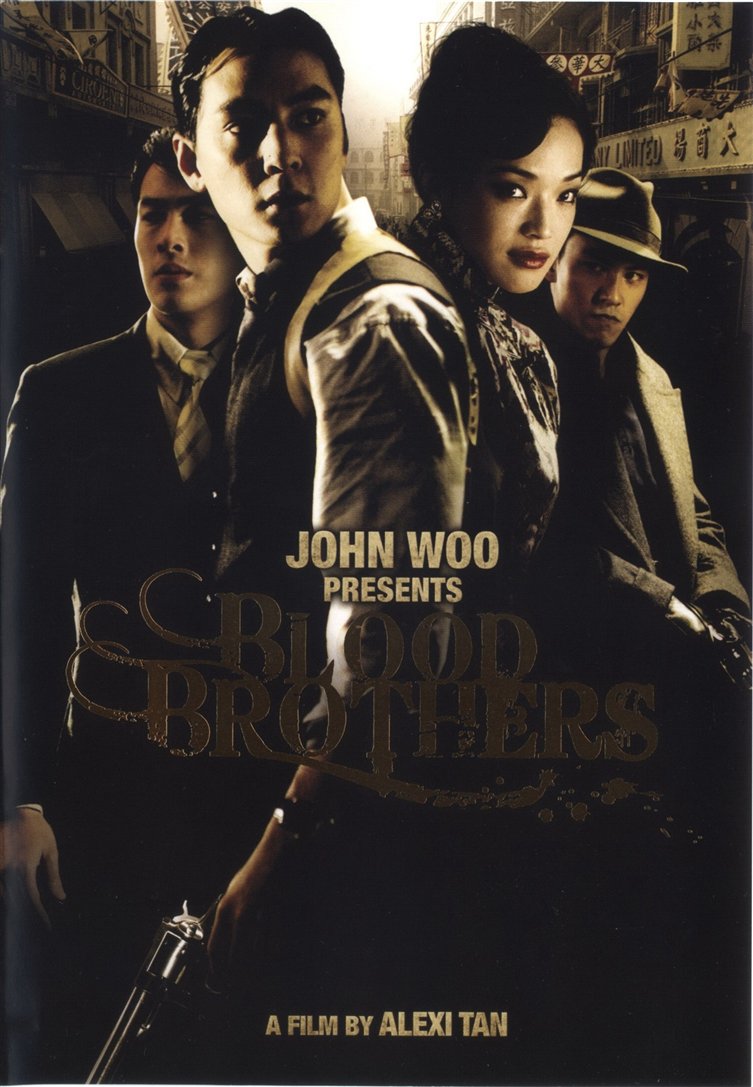
Alexi Tan’s Blood Brothers has been called a remake of John Woo’s Bullet in the Head, but it is really more of a “partquel” if you will, in that it only reworks a segment of the original, and even then, it reworks it pretty loosely. The plot points that remain are mainly the three friends (here, Daniel Wu, Liu Ye and Tony Yang) leaving their hometown to try their luck in the world (here, in Shanghai), and getting violently estranged by fate, one of them going bad and working for the mob. Carried over from John Woo’s film are also the beautiful singer (here, Shu Qi) and the mysterious killer (here, Chang Chen). The similarities stop there, as Alexi Tan’s film goes in a different direction entirely with this set of characters. So the three friends (actually two brothers and a friend) come to Shanghai where they get work in a fancy nightclub held by a charismatic but cruel mob boss (Sun Honglei). Things go bad when one of the friends (Liu Ye) starts going to seed and showing a proclivity for killing, and another (Daniel Wu) falls in love with the mob boss’ trophy girlfriend (Shu Qi), who is herself having an affair with one of his enforcers (Chang Chen).

(more…)

ONCE UPON A TIME IN CHINA 5 (1994) review

  Jet Li’s departure from the Once Upon A Time In China series that had made him a superstar didn’t stop producer/director Tsui Hark from proceeding with the franchise, thus recasting the central character of Wong Fei-Hung with another Mainland Wushu champion, Vincent Zhao. This led to a fourth episode, directed by a Yuen Bun, that ended up being far less successful than any of the Jet Li installments. It did have fixtures of the franchise like Max Mok’s Leung Fu or Xiong Xin Xin’s Clubfoot, but the absence not only of Jet Li, but also of Rosamund Kwan’s Aunt Yee, another major character in the franchise, coupled with uninspired direction, made it look like a bargain bin iteration of the Chinese hero’s adventures. And so for the fifth episode, Tsui Hark returned to the director’s chair, signed his protege for the lead role again, managed for Rosamund Kwan to return, but more importantly tweaked the formula of the series a little bit by making it more akin to a serial, mostly by including pirates and a treasure into the mix.

(more…)

THE INSPECTOR WEARS SKIRTS (1988) review

Also known as Top Squad in some countries, The Inspector Wears Skirts was very successful when it came out in 1988, starting a franchise that would yield four films, the first two being produced by Jackie Chan. Three of the four episodes star Sibelle Hu as Madam Wu, an instructor for an elite squad comprised only of women, nicknamed the amazones, and who are supposed to take on missions men can’t, their advantage being based on the fact that women are not usually expected to be elite agents (at least at the time), which can prove useful in situations such as infiltrating a hostage situation. Therefore young women are selected to go to a boot camp under the hard supervision of Madam Wu. All this set up is of course little more than a pretext to get a dozen attractive actresses in a situation of competition and cohabitation, with the added sexual tension brought by the fact that an all-male squad is being trained in the same premises, under the direction of Stanley Fung.

(more…)

FIST POWER (2000) review

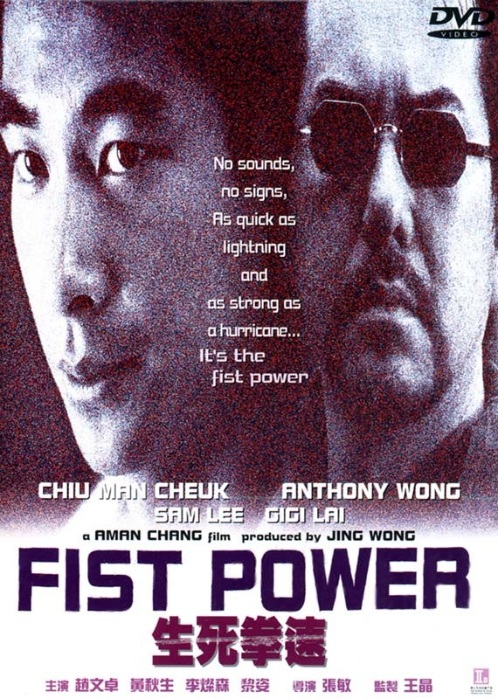
Shot on the cheap and in less than a fortnight by the exact same team responsible for the dubious Body Weapon one year earlier (director Aman Chang, producer Wong Jing and star Vincent Zhao mainly), Fist Power is a small, harmless action film about Chau, a Hong Kong policeman (Anthony Wong Chau Sang) who holds an entire school hostage in a desperate attempt to reclaim custody of his son. It’s left to Chiu, a Mainland security expert (Vincent Zhao) whose nephew is in said school, to find the son and bring it to Chau before he blows up the place.

Narratively, Fist Power is pretty straightforward : after half-an-hour spent setting things up, the film becomes a basic race against the clock for its remaining hour. The only obstacle Chiu meets in his quest to bring Chau’s son to him are thugs at the service of Chau’s estranged wife, and so the film is always alternating between our hero running from a point A to a point B, and scenes of our hero beating up some anonymous thugs. All that being interspersed with scenes of Sam Lee trying to provide comic relief, and as usual, alienating the audience in the process. That would be fine if the director were able to ramp up the tension, but instead he seems more interested in throwing every cheap, direct-to-video-reeking editing trick at the spectator, undermining not only the film’s already flimsy suspense, but also its numerous action scenes. This is all the more annoying as Fist Power has a lot of talent in front of the camera.

(more…)

DRUNKEN MONKEY (2004) review

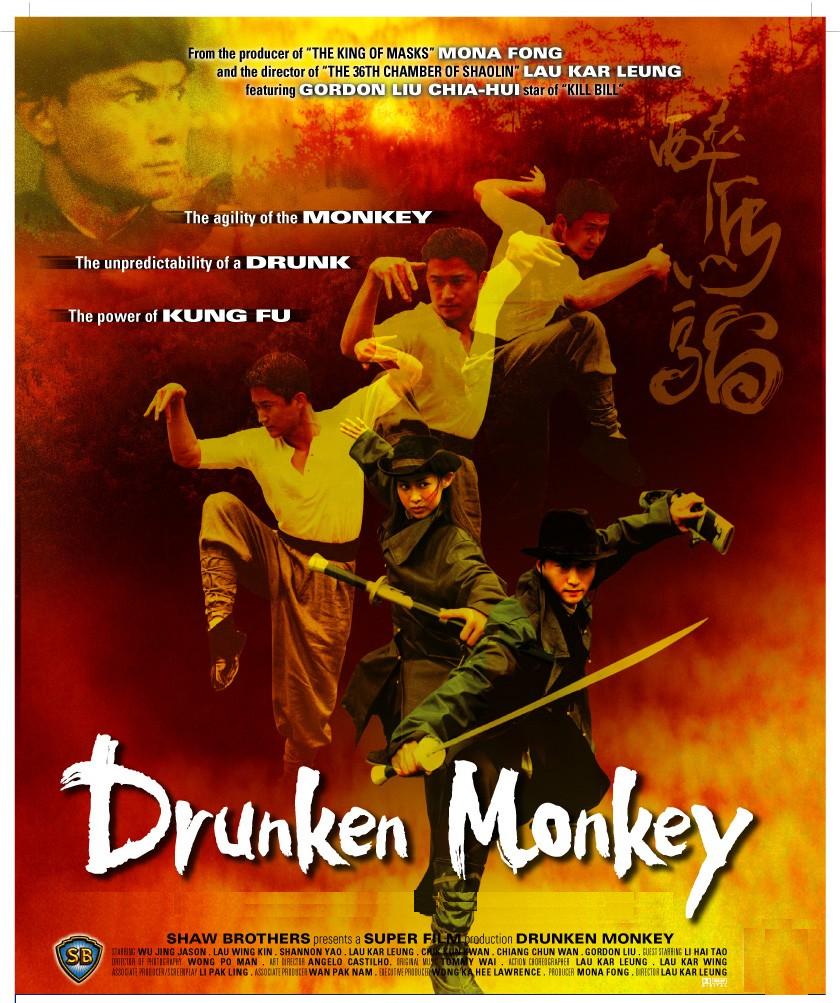
When Liu Chia-Liang, the legendary director/actor of the Shaw Brothers’ heyday, directed Drunken Monkey in 2003, he was coming off a nearly ten-year hiatus from movies, having last directed (and butted heads with) Jackie Chan in the indisputable classic Drunken Master II. He was 67 years-old and the kind of costumed martial arts movie he had been famous for (like My Young Auntie, Mad Monkey Kung Fu or The 36th Chamber of Shaolin, to name only a few) had been out of fashion for a long time. Indeed, thrillers about undercover cops or cgi-heavy action extravaganzas were all the rage, and Jackie Chan, Jet Li, Donnie Yen and Sammo Hung Kam-Bo were working mostly overseas. Sure, Ang Lee’s Crouching Tiger, Hidden Dragon and Zhang Yimou’s Hero had triumphed domestically as well as internationally, but they represented painterly wire-fu rather than the more down-to-earth, blistering brand of kung fu that Liu had been famous for.

(more…)

THE SORCERER AND THE WHITE SNAKE (2011) review

313951_2221844102610_1350410278_n

Adapted from the same Chinese legend that inspired Tsui Hark’s Green Snake in 1993, Ching Siu-Tung’s The Sorcerer and the White Snake tells of the love between a kindly herbalist (Raymond Lam) and a white snake demon (in human form, that of Eva Huang Shengyi) ; he doesn’t know she’s a snake demon, but abbot Fahai (Jet Li) does. He’s a demon hunter of sorts : when we first meet him, he’s with his assistant Neng Ren (Wen Zhang) vanquishing an ice harpy (Vivian Hsu). Though he can see there is real love between the herbalist and the white snake, Fahai cannot approve of such a union, and issues an ultimatum to the latter. But things get a bit more tangled when Neng Ren himself, having been bitten by a demon, starts taking the appearance of a bat, while falling in love with a green snake demon (Charlene Choi).

(more…)

RED WOLF (1995) review

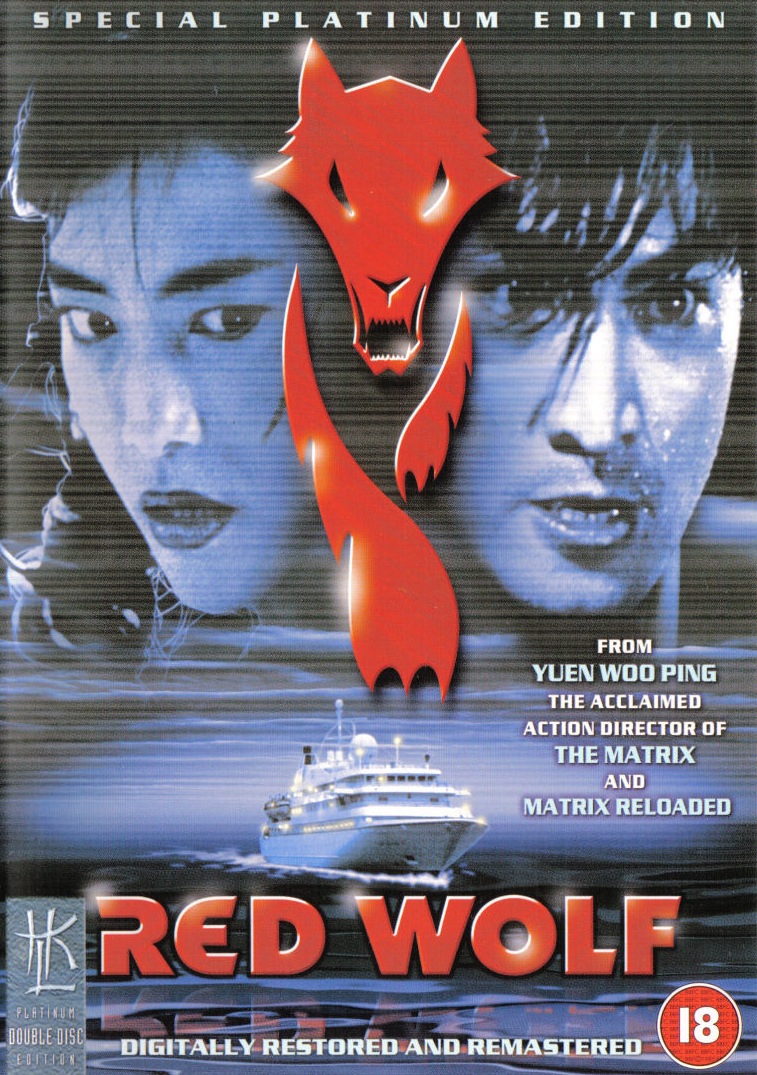
It’s no secret the success of John McTiernan’s Die Hard led to all kinds of rip-offs, good and bad, throughout the nineties, but here is an example of the formula “man in the wrong place at the wrong moment foils bad guys in a circumscribed space” that actually hails from Hong Kong : Red Wolf, directed by martial arts supremo Yuen Woo-Ping in 1995. It stars Kenny Ho in the John McClane role of a head of security on a cruise ship who has to fight a crew of terrorists who have taken advantage of the New Year’s Eve celebrations to hijack the boat, aboard which there is a large quantity of uranium that they aim to steal.

(more…)