THE STRANGE HOUSE (2015) short review

142153.61949816_1000X1000

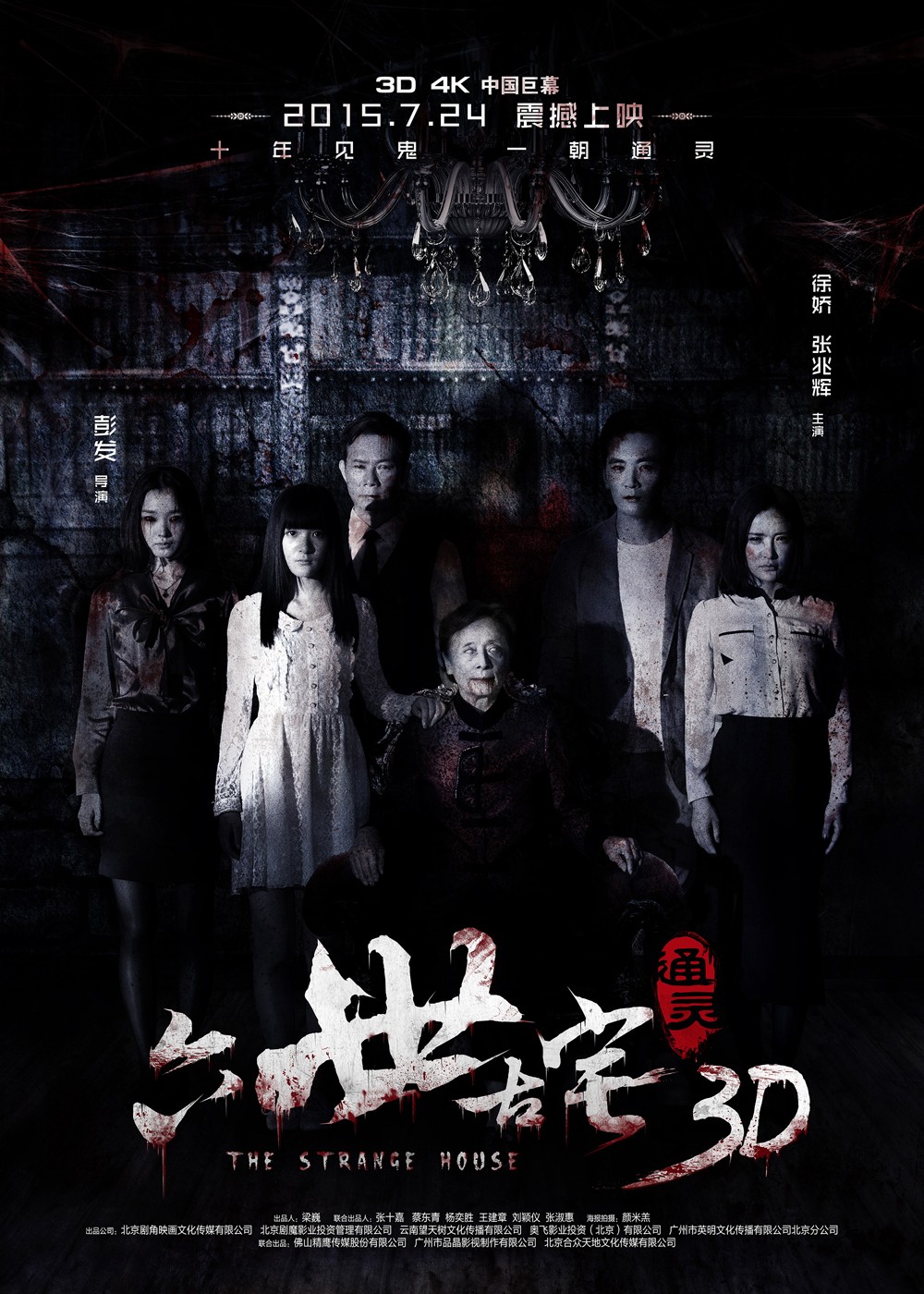
Danny Pang’s sixth film not to be co-directed by his brother Oxide (though only his third without any official involvement whatsoever from the latter), The Strange House slipped completely under the radar in its summer 2015 China release. The set-up is reasonably interesting: Ye Zi (Xu Jiao) is a young hairdresser with money problems. Just as she is threatened with eviction, she is approached by Le Zijun (Cheung Siu Fai), a psychologist who makes her a strange offer: his mother is in the throes of death, and all her family is with her except one, Le Rong, who died a year ago and to whom Ye Zi bears a striking resemblance. Everyone kept Le Rong’s death a secret from the matriarch, fearing the tragic news would precipitate her illness, but now in her final days she’s asking for her granddaughter. Thus for a generous sum of money, Ye Zi is to impersonate Le Rong and bring closure to the dying woman. She accepts, but once in the family house she’s faced with bizarre hostility from the rest of the family, and plagued with visions of a dead boy. After an interesting and fairly unsettling start, and despite nicely ambiguous performances from Xu Jiao and Cheung Siu Fai, The Strange House quickly devolves into the usual broth of jump scares, belabored exposition (has a person ever died mysteriously without leaving a detailed diary behind?) and censorship placating: the SARFT‘s “no supernatural elements” rule means the film ends with the same old twist generally used in Mainland Chinese horror to justify the apparent presence of ghosts. To its credit, the film does add a clever narrative and visual footnote to this twist, as if to compensate for how derivative and contrived it is. **
TO THE FORE (2015) short review

FA_TO-THE-FORE-poster-A3

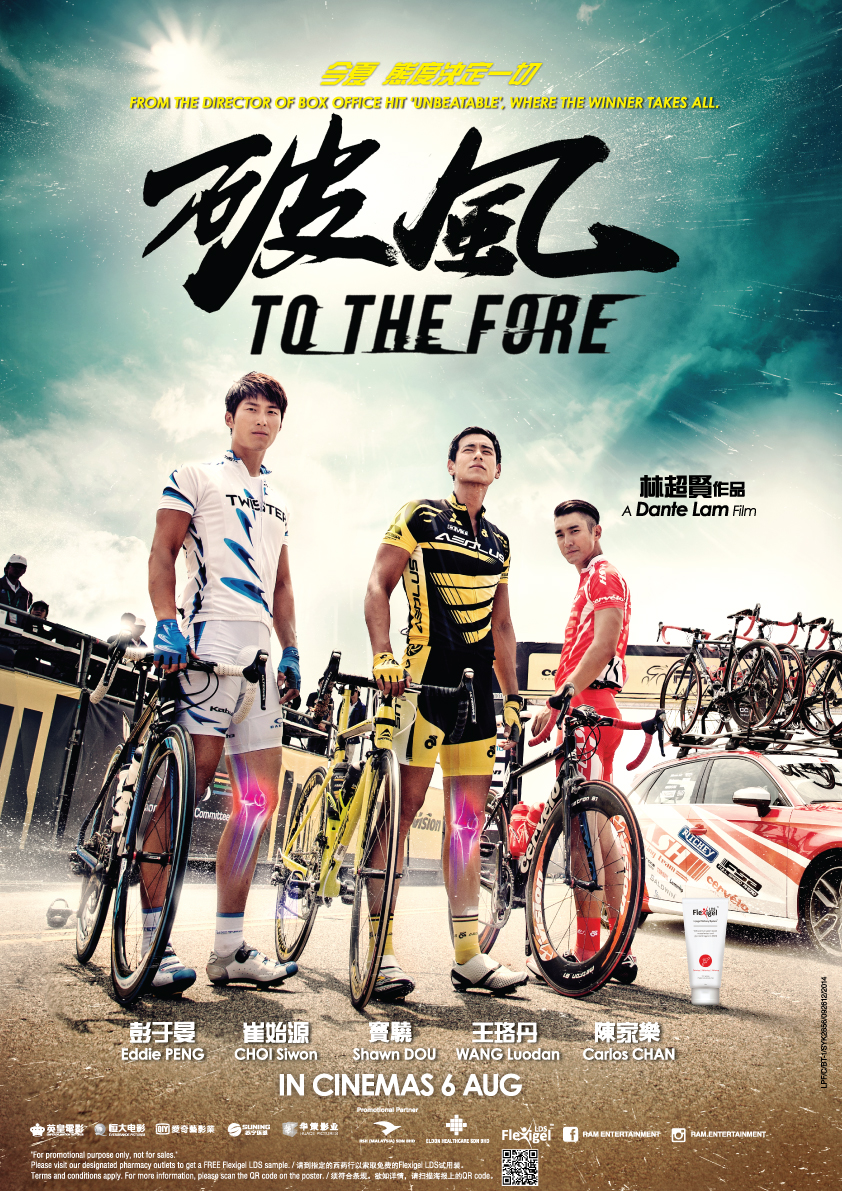
Hong Kong’s puzzling submission to the 88th Academy Awards, Dante Lam To The Fore is no less puzzling as part of Dante Lam’s filmography. Sure, one can imagine the director wanting to recapture the success of his other sports film, 2013’s Unbeatable which already starred Eddie Peng, but that film had a cinegenic discipline, MMA, as well as emotion and compelling characters. To The Fore – previously rather hilariously known as Breaking Wind – has biking which is beautiful in tracking shots but quickly boring in close-up, empty melodrama consisting of a routine love-triangle and a checklist of sports-related woes like doping, a superiority complex, or a crippling handicap to overcome, and stock characters. Interesting nuggets, like Eddie Peng’s love-hate  relationship with his mother who abandoned him, and enjoyably bombastic cycling montages (given considerable momentum by ambitious camera-work, seamless stunt-work and Henry Lai’s grand score) are what keep this somewhat rote saga of competing cyclists afloat. It also helps that Eddie Peng (gifted but prideful), Choi Si-won (charismatic rival), Shawn Dou (always overshadowed), Wang Luodan (resilient, love-triangle fodder) and Andrew Lin (reliable coach) all inhabit their formatted characters with conviction. **1/2

DETECTIVE CHINATOWN (2015) review

095017.75386000_1000X1000

Chen Sicheng’s second film as director after his successful romantic anthology Beijing Love Story in 2013, Detective Chinatown follows the unlikely duo of Tang Ren (Wang Baoqiang), a Chinese expatriate in Bangkok who calls himself a private investigator but is actually more like a swindler, and Chin Feng (Liu Haoran), his distant cousin who pays him a visit to take his mind off his latest failure to enter police college. The zany Tang and the strait-laced Chin are an unlikely fit, but soon they have to set their differences aside as the former is accused of the murder of an art smuggler. The two competing sergeants of the Bangkok Chinatown police station (Chen He and Xiao Yang) are in a race to bring him to justice, as the one who does so is sure to become the new commissioner. Chased not only by the police, but also by a local crime boss (Chin Shih-Chieh) who thinks Tang stole his gold, and a trio of thieves who actually stole that gold but also think Tang stole it from them (Xiao Shenyang, Sang Ping and Zhao Jingjun), the two cousins can only count on the help of Tang’s landlady (Tong Liya) – whom he no-so-secretly loves – as they try to clear his name by looking for the real killer. It helps that Chin has an almost Sherlock Holmes-like capacity for deduction, and an endless knowledge of detective fiction.

Read the full post »

INSIDE OR OUTSIDE (2016) review

172952.20101734_1000X1000

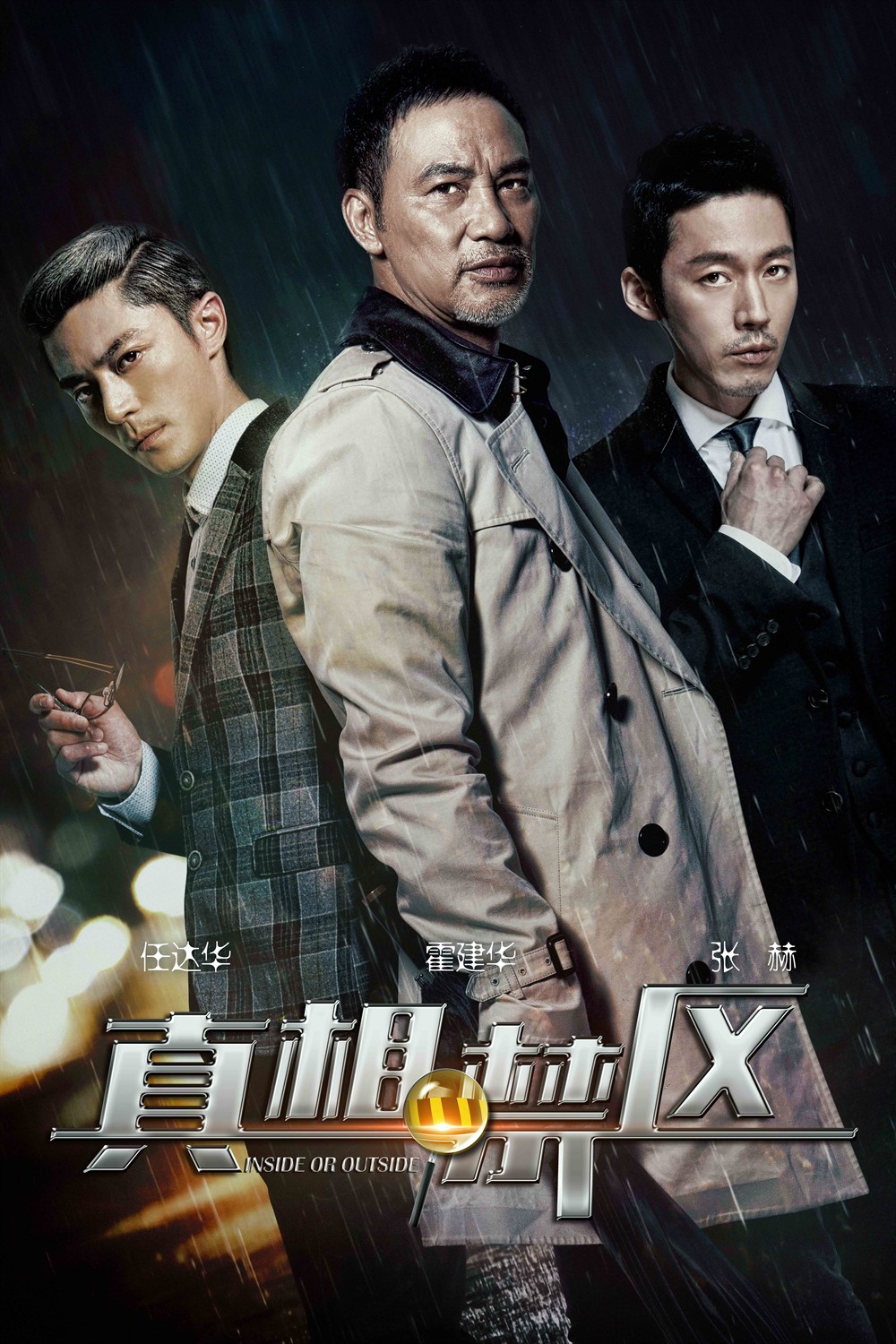
Directed by Gary Mak Wing Lun, whose filmography as an assistant-director is much more illustrious than his filmography as a director, Inside or Outside follows a pair of private detectives: Fei Xin (Simon Yam) is a cool, collected retired police sergeant and Qiu Le (Wallace Huo) is a hothead who got expelled from the police. One day, successful writer Nanfang (Rayza) calls on their services to follow her husband Ou Jian (Jang Hyuk), whom she suspects of having an affair. She’s just given birth, and Ou’s coldness to her and the baby makes her think he doesn’t love her and married her for her father’s money and business connections. It turns out Ou is infertile but hasn’t told his wife, and thus believes she cheated on him and the baby is from another man. To complicate matters, a man from his past resurfaces: Xie Tianyou, his former business partner, against whom he testified in a trial and who subsequently went to jail. Xie is actually a dead-ringer for Qiu Le (and thus also played by Wallace Huo), which complicates matters even furtherer.

Read the full post »

JUST ANOTHER MARGIN (2014) review

172128.11786572_1000X1000

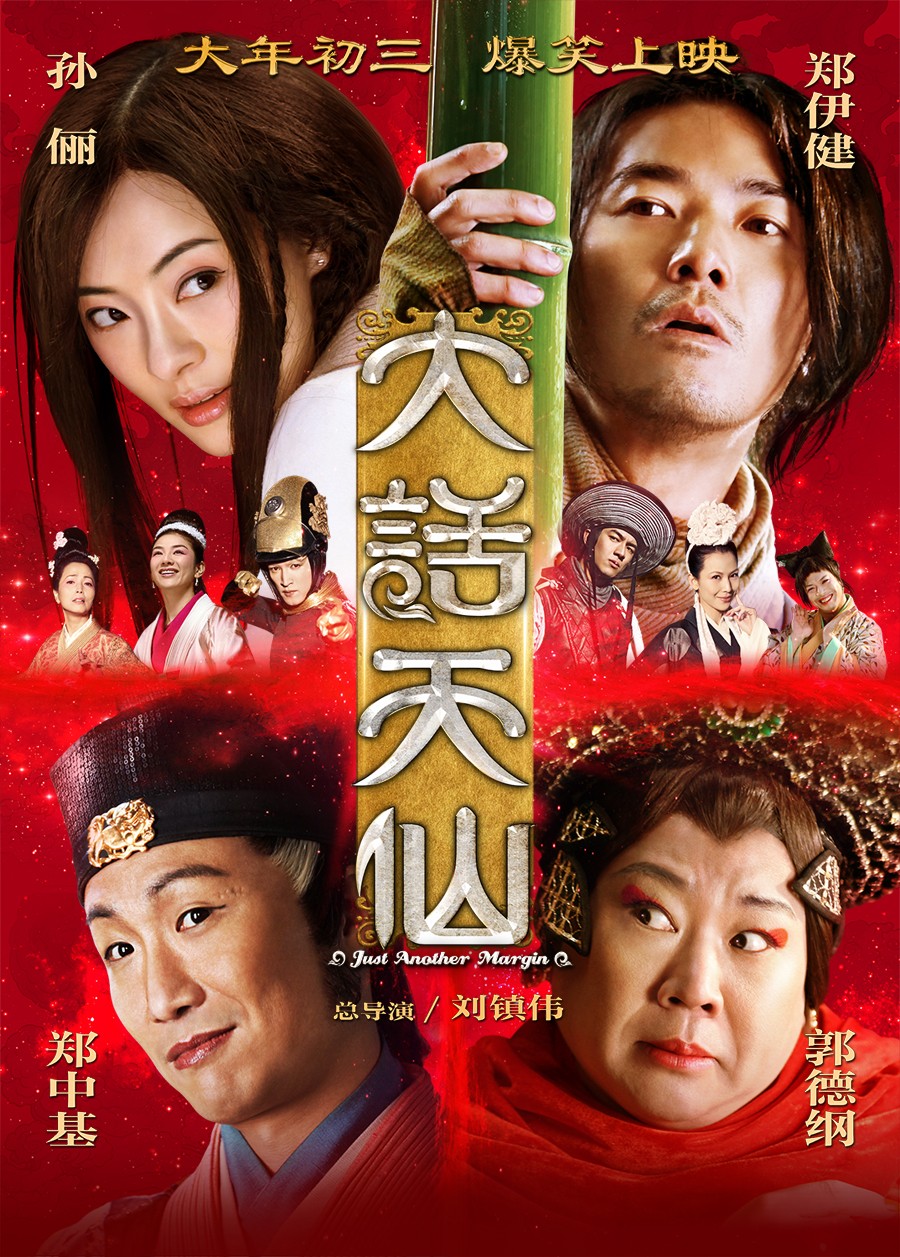
Jeff Lau’s Just Another Margin is one of those films that are seemingly tailored for Lunar New Year entertainment but don’t quite have the star power or marketing push required to compete in that prized calendar slot, and are thus slipped in a bit before or after on the release schedule. And it did go by relatively unnoticed, which is not all that surprising considering how uninspired it appears in the Jeff Lau canon of costumed mo lei tau. It stars Betty Sun as Jin Ling, a young woman whose magical yueqin (a kind of round guitar) compels people tell to the truth. One day this creates a humiliating situation for Mrs Zhao (Guo Degang), a rich businesswoman who punishes her by arranging her marriage with the town’s hunchback Mao Da-Long (Lam Suet), with whose brother Mao Song (Ekin Cheng) Jin Ling ends up falling in love. That doesn’t sit well with Shi Wen Sheng (Ronald Cheng) Mrs Zhao’s libidinous cousin, who wants the young woman for himself and plots to take the Mao brothers out of the picture. To complicate things, two aliens from planet B16 named Tranzor and Shakespeare (Patrick Tam Yiu-Man and Alex Fong Lik-Sun) arrive in town in search of a long-lost member of their species. They’re not the only aliens around however, as a fearful entity known as the Black Emperor is hiding somewhere.

Read the full post »

DEVIL AND ANGEL (2015) review

095725.74621912_1000X1000

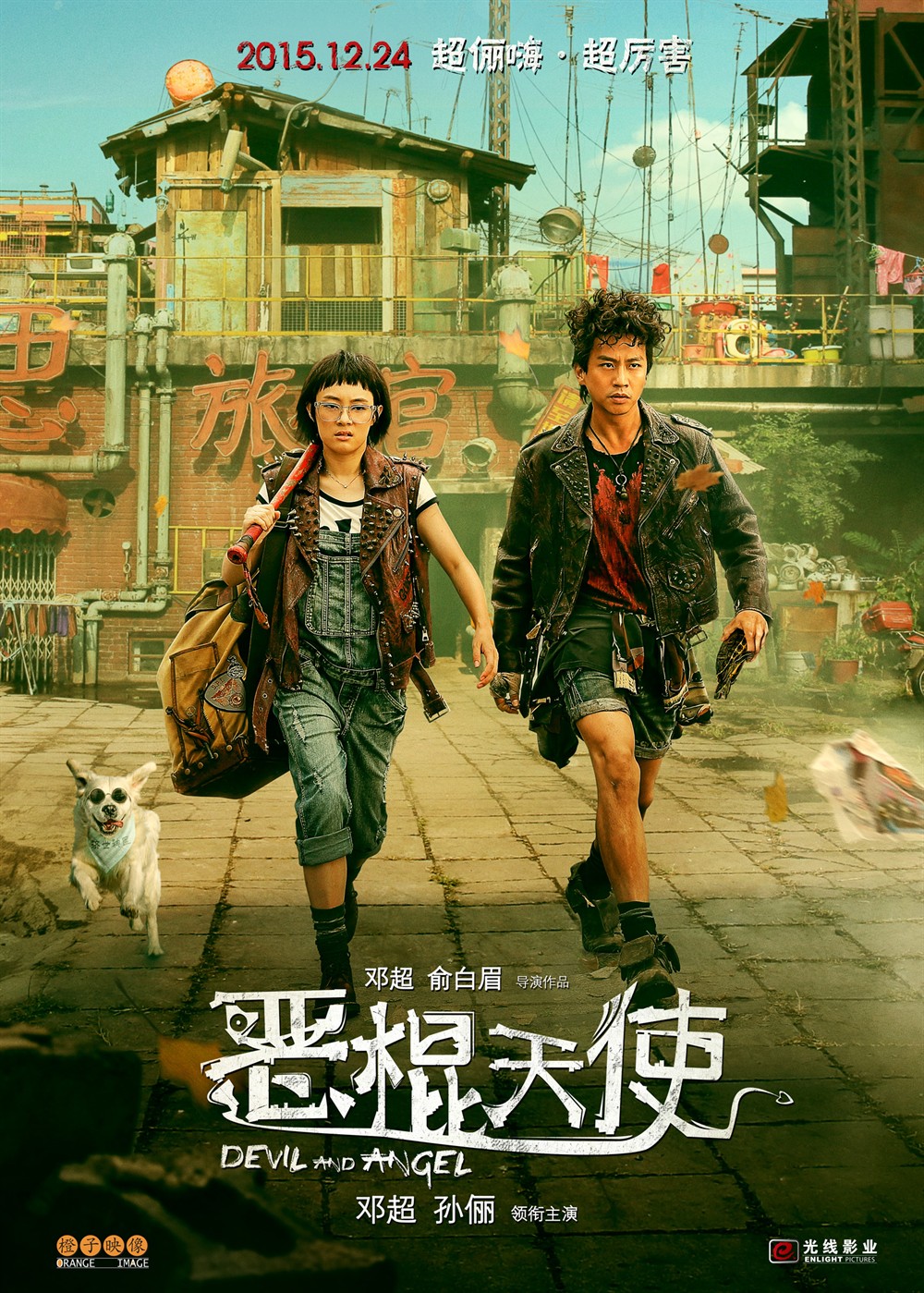
Deng Chao has had a great few months, from starring in Cao Baoping’s acclaimed crime drama The Dead End last summer, to being the lead in Stephen Chow’s record-obliterating The Mermaid during Chinese New Year. In between was Devil and Angel, his second film as a director and a major hit in its own right. It re-teams him behind the camera with Yu Baimei, already the co-director of his previous directorial effort The Breakup Guru and whose script is an adaptation of his own eponymous play, and in front of the camera with his wife in real life (and a hugely popular actress in her own right), Betty Sun.

Read the full post »

DAUGHTER (2015) short review

150014.83989477_1000X1000

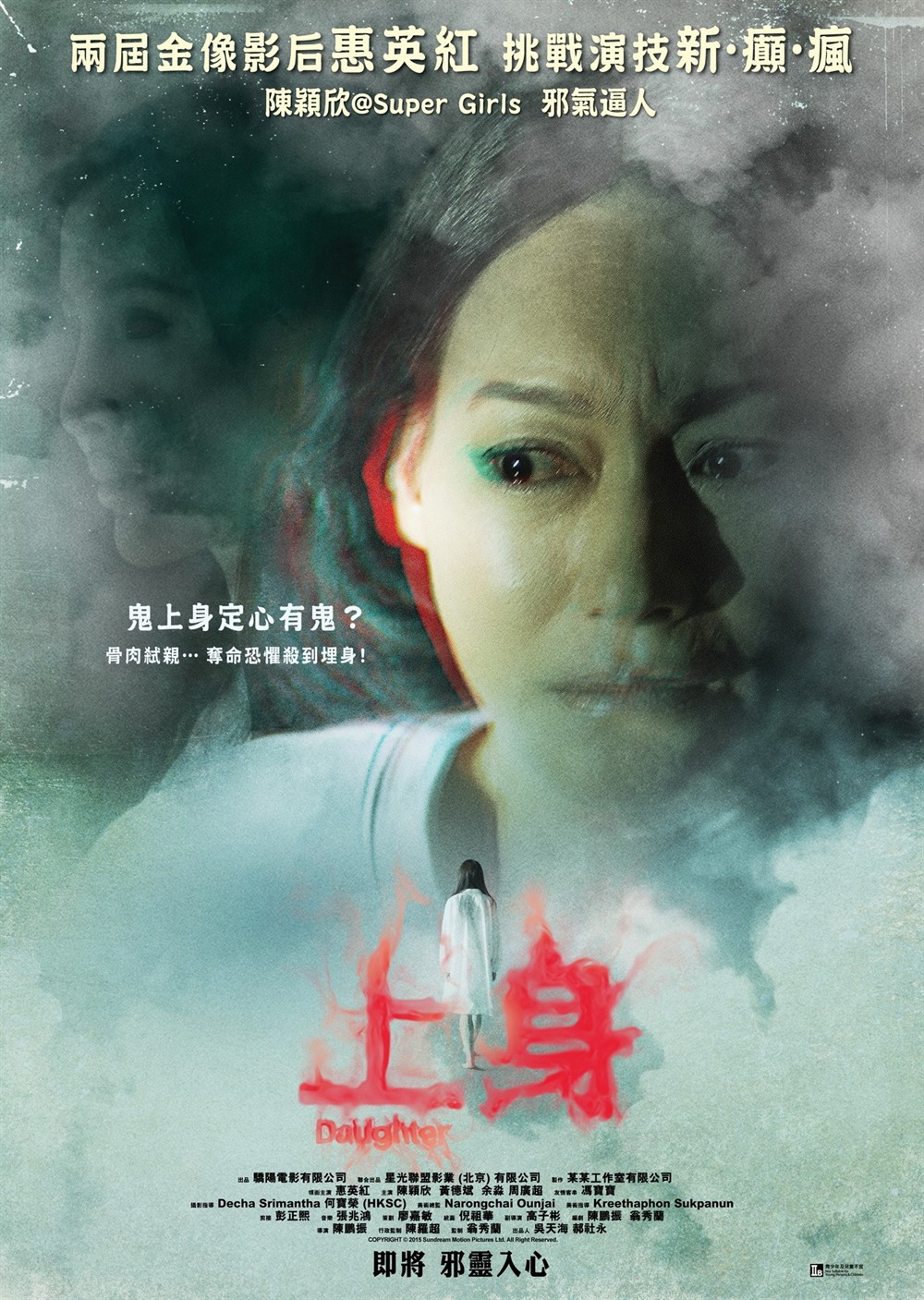
Chan Pang Chun’s Daughter is that rare Hong Kong horror film that features a Catholic – rather than Taoist – exorcism. It stars Kara Hui as Sharon, a successful psychologist who’s raising her teenage daughter Jenny (Yanny Chan) alone, but has been neglecting her for a while, all the while being a control freak when it comes to her future. But as the usually despondent Jenny starts acting increasingly defiant and strange, Sharon herself is plagued with horrific nightly visions, and she decides to call on the help of a priest (Kenny Wong). Daughter seems to have been helmed by two different directors: one who lets the dread sink in, favors creepy wide angle shots over close-up jump scares, and relies on Kara Hui’s intense and affecting performance rather than on CGI demon faces; and another who soon gets the upper hand, and who seems more concerned with regurgitating every single cliché linked to the subgenre of exorcism films, culling especially from William Friedkin’s seminal 1973 film. Beds will quake, innocent girls will talk in a demonic voice, pea soup will be vomited, priests will be flung across the room by unseen forces, and so on. You know the drill. There’s a half-decent twist at the end, but even at 80 minutes the film feels interminable. **

HOUSE OF WOLVES (2016) review

092009.30339340_1000X1000

Vincent Kok’s House of Wolves follows two scoundrels thriving in a small village: Charlie (Francis Ng) is a dognapper who pretends to be sclerotic in order to ingratiate himself to the ladies and avoid suspicion, and whose main ambition is to become a kept man, while Ping (Ronald Cheng) is an incredibly vain mama’s boy who’s also the village chief. They both find themselves vying for the attention of Chun (Jiang Shuying), a young writer who just arrived to the village. Now Chun is actually pregnant with a child whose father she’s running away from, and after inviting the two lovestruck rascals to her house and getting them drunk, she leads them to believe that one of them is the father of the child. Their rivalry as suitors becomes a rivalry as fathers, until they find out they’ve been tricked into surrogate fatherhood, and decide to go to the child’s real genitor.

Read the full post »

CROUCHING TIGER, HIDDEN DRAGON: SWORD OF DESTINY (2016) review

Mtime.com

Making a sequel to Ang Lee’s Crouching Tiger, Hidden Dragon always seemed both natural and foolish, audacious and misguided. The 2001 film was adapted from one in a series of novels by Wang Du Lu, thus lending itself naturally to follow-ups; but it was so acclaimed that it made for a tough act to follow. There was then a interesting challenge to shooting a second film, but at the same time the absence of Ang Lee or someone with a similarly strong vision at the helm did not bode well, Yuen Woo Ping having always been hit-and-miss as a director. The film’s production was troubled, its release pattern controversial (it premiered on Netflix in the West, prompting many IMAX chains to refuse to screen it in the US), and its English soundtrack head-scratching. But those factors weren’t in and of themselves indicative of failure, especially with so much talent behind and in front of the camera.

Read the full post »

KUNG FU FIGHTER (2007) short review

kung-fu-fighter-2007.22548

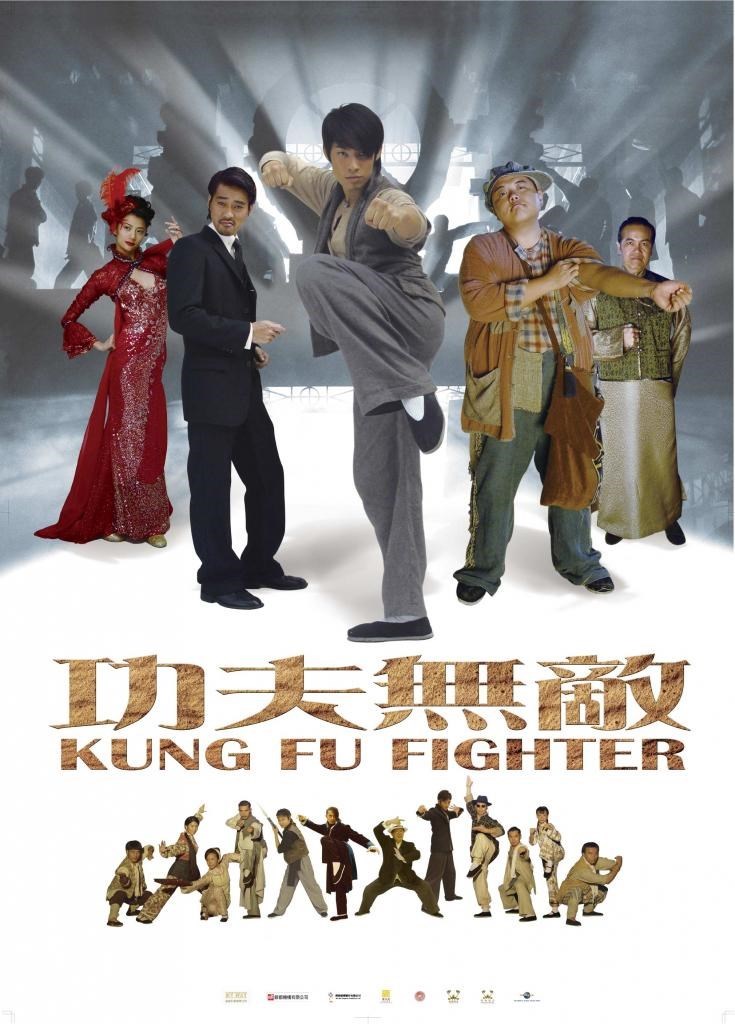
Featuring the same sets, costumes and many of the same cast-members as Stephen Chow’s Kung Fu Hustle, but only a quarter of its budget and a tenth of its creativeness, Yip Wing-Kin’s Kung Fu Fighter also borrows heavily from the Ma Wing Jing story, as told in the Shaw Brothers film Boxer from Shantung (1972) and Corey Yuen’s Hero (1997). Thus we follow a young country bumpkin (a vacant-eyed Vanness Wu) who comes to Shanghai in search of his father and ends up falling for a beautiful cabaret singer (Emme Wong), getting entangled in a turf war between mob bosses (Chan Kwok Kwan and Tin Kai Man), getting himself a portly sidekick (Lam Chi Chung) and meeting a kind master (an endearing Bruce Leung) who may know a thing or two about his father. It’s a puzzlingly half-baked film, in which some interesting visual flourishes and good choreography (by Fan Siu Wong) get undermined by a complete lack of focus and dramatic momentum and an excess of cartoonish visual trickery, again aping Stephen Chow’s film. The final fight scene is actually quite enjoyable, as Fan Siu Wong injects some charisma into the film by popping up as a dangerous grandmaster, and up-and-comer Max Zhang gets a good staff fight. But it’s not enough to prevent cartoonish surfeit and half-baked drama from dooming the film to mediocrity. *1/2